

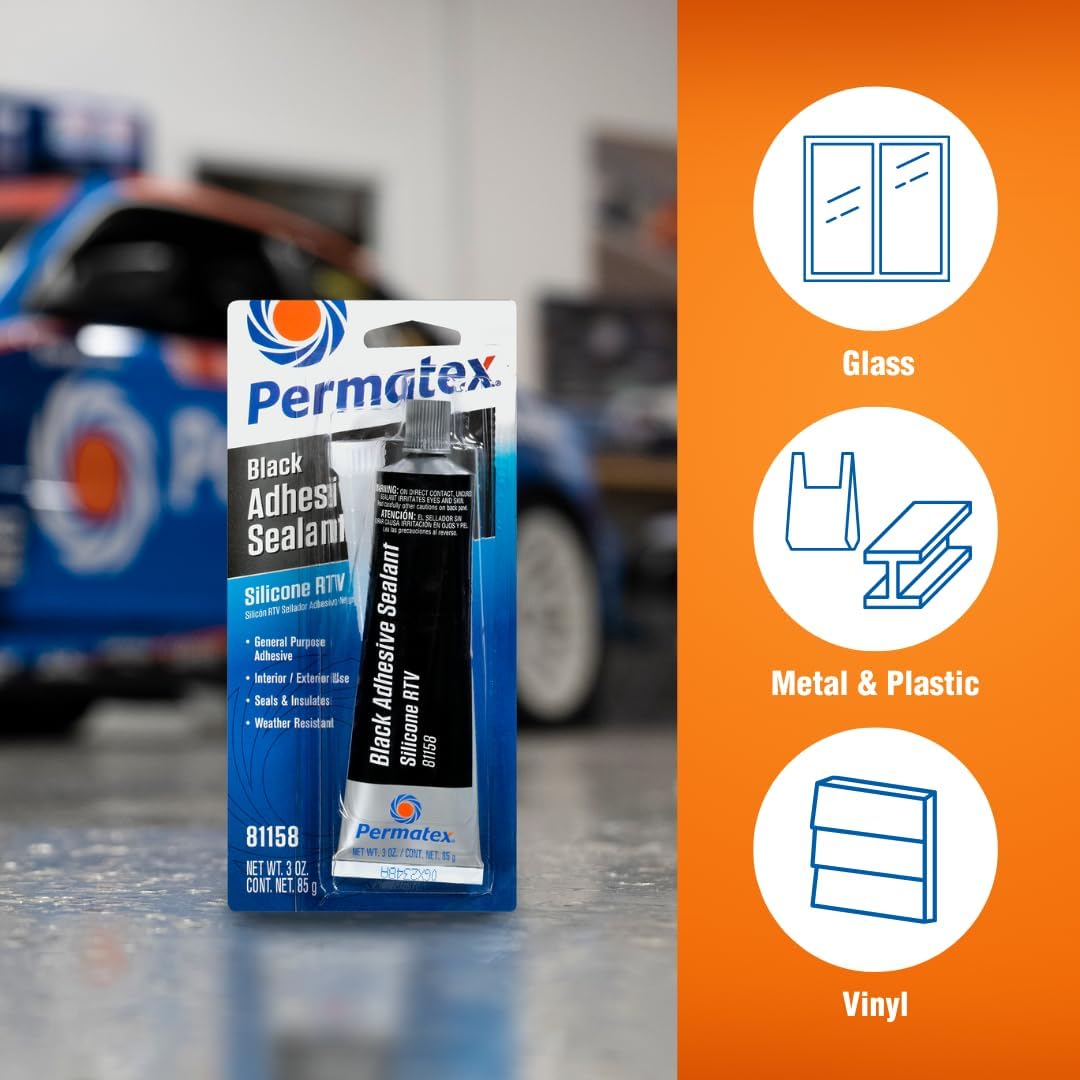
Looking for a reliable black silicone sealant that handles automotive, household, and marine tasks without fuss?
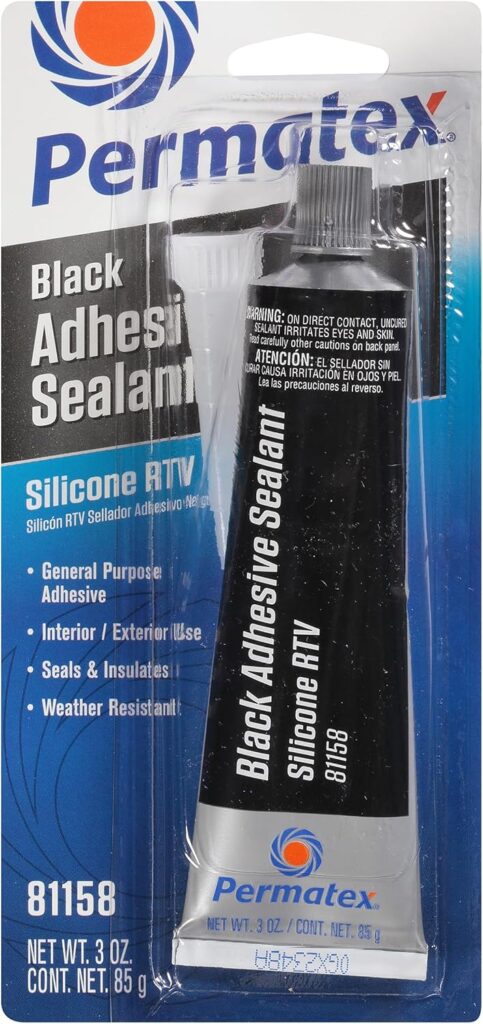

Product Review: Permatex 81158 Black Silicone Adhesive Sealant, 3 oz. Tube, Pack of 1
You’ll find this Permatex sealant marketed as a general-purpose, sensor-safe RTV designed for indoor and outdoor use. The packaging is a single 3 oz. tube, which is convenient for one-off repairs or testing before committing to larger quantities.
Product summary
You get a black, sensor-safe RTV silicone that claims to seal, bond, repair, mend, and secure a wide range of substrates. It’s designed to remain waterproof and flexible while resisting water, weather, and vibration, making it useful for many environments.

Specifications and quick facts
You’ll want to know the core specs at a glance, since that defines whether this product will work for your project. The summary below captures the important technical details and handling notes.
| Attribute | Details |
|---|---|
| Product name | Permatex 81158 Black Silicone Adhesive Sealant, 3 oz. Tube, Pack of 1 |
| Color | Black |
| Tube size | 3 oz (approx. 89 g) |
| Pack | Single tube (Pack of 1) |
| Type | Sensor-safe RTV silicone adhesive/sealant |
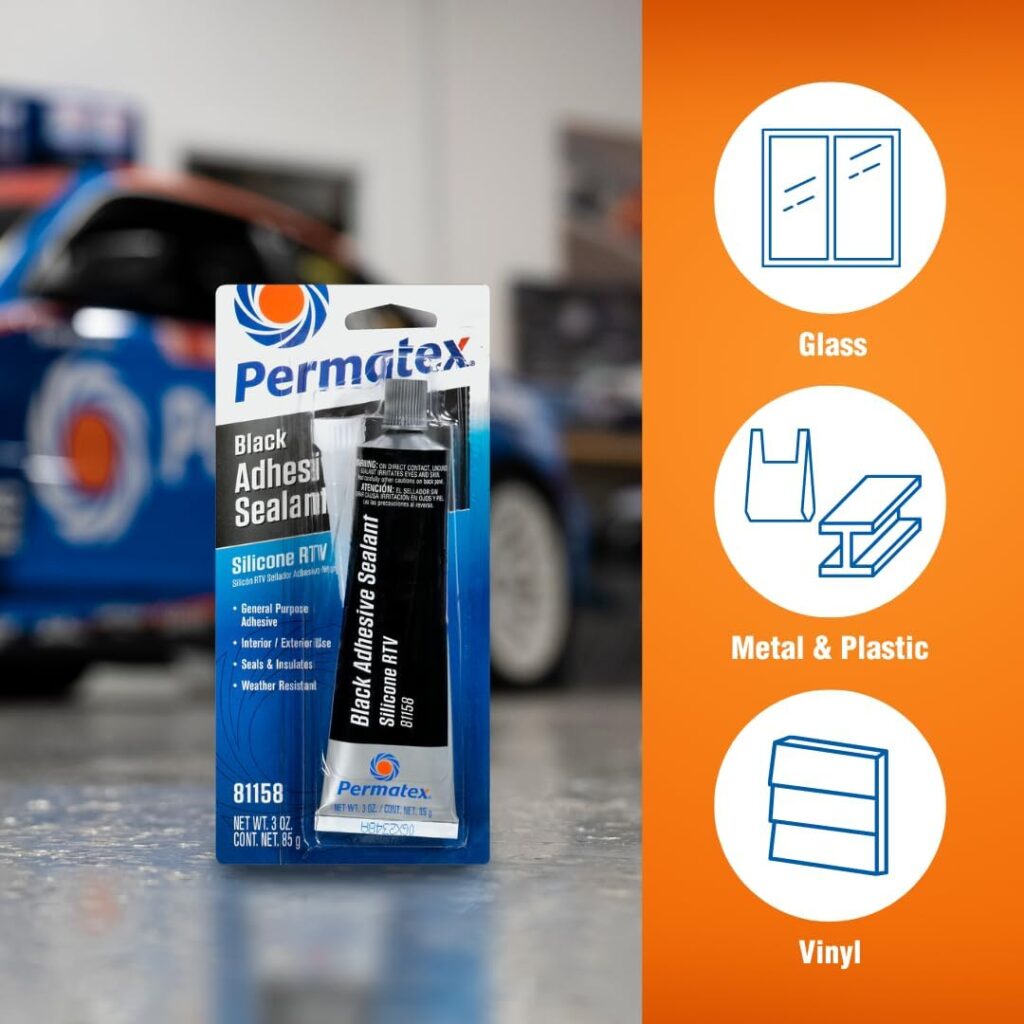
| Uses | Seals, bonds, repairs, mends, secures (glass, metal, plastics, fabric, vinyl, weather stripping, vinyl tops) |
| Temperature range | -75°F to 450°F (-59°C to 232°C) |
| Resistance | Waterproof, weatherproof, vibration resistant |
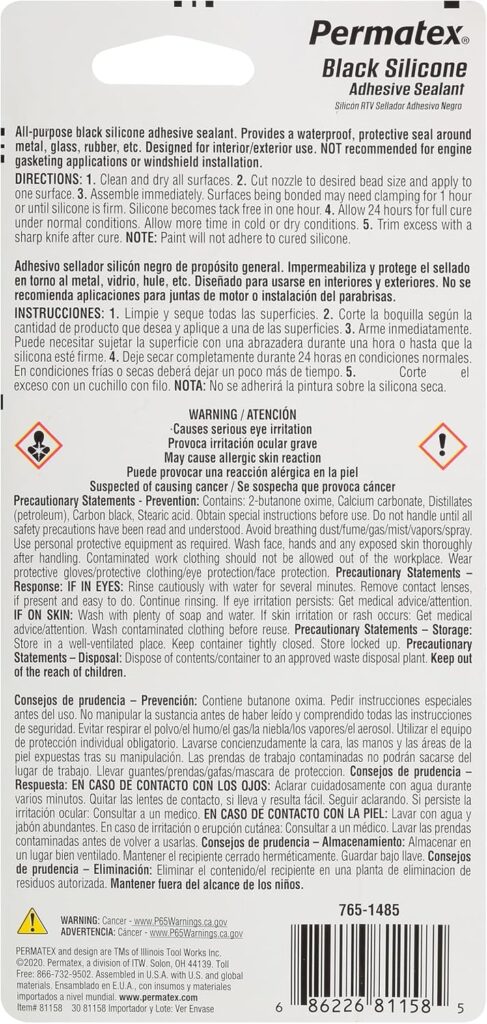
| Clamping note | Surfaces may need clamping for 1 hour or until silicone is firm |
| Typical cure | Skin forms in minutes; full cure dependent on bead thickness and environment (commonly 24 hours under typical conditions) |
You’ll find that the specs emphasize temperature tolerance and general-purpose bonding, making it versatile for many tasks.

Key features
You should understand the features that set this product apart so you can match it to your needs. Below are the standout attributes and what they mean in practical terms.
Sensor-safe formulation
You’ll appreciate that the product is labeled sensor-safe, meaning the cured silicone is formulated to avoid contaminating oxygen sensors and similar components. This reduces the risk of sensor damage when used in automotive exhaust or engine-area sealing situations.
Broad temperature resistance
You’ll notice the temperature range from -75°F to 450°F (-59°C to 232°C) is wide enough for many automotive and industrial applications. That range proves useful when you need a sealant that won’t harden or break down under high heat or freeze in cold conditions.
Waterproof and weather-resistant
You’ll rely on this sealant to handle outdoor exposures because it’s designed to resist water and weather. That makes it suitable for exterior repairs like sealing trim, weather stripping, or vinyl tops without immediate degradation.
Flexibility and vibration resistance
You’ll want a sealant that stays flexible to accommodate movement and vibration, and this product specifically claims to resist vibration-related failures. That helps maintain bonds on parts that experience thermal expansion or mechanical movement.
Bonds to many materials
You’ll find it bonds to glass, metal, some plastics, fabric, vinyl, weather stripping, and vinyl tops. However, you should be aware that some low-energy plastics (like polyethylene or polypropylene) may require priming or special surface preparation for a reliable bond.
How it performs in real applications
You should know how the Permatex 81158 behaves in actual use, beyond the marketing claims. The following sections break down typical performance areas you’re likely to care about.
Adhesion strength
You’ll generally get strong adhesion to clean, properly prepared surfaces such as glass, aluminum, steel, and many painted or primer-coated areas. If you’re bonding low-energy plastics, you should test first or use a primer to improve adhesion.
Curing and setup
You’ll experience a skin-over time that is generally quick, while full cure depends on bead thickness and environmental humidity and temperature. Permatex notes surfaces may need clamping for 1 hour or until the silicone is firm, so you should plan for at least that short period for structural holds.
Durability over time
You’ll appreciate that cured silicone retains flexibility and resists cracking, allowing it to last through temperature cycling and vibration. Provided you apply it correctly and avoid unsuitable substrates, you can expect longer life than many non-silicone sealants.
Heat and cold resistance
You’ll rely on the wide operating range for components exposed to engine heat or freezing conditions; the product stands up to extreme temperatures without losing sealing properties. This makes it suitable for areas near exhaust manifolds, heated housings, or outdoor components in cold climates.
Water and weather exposure
You’ll notice that the sealant maintains waterproof seals even after extended weather exposure, which is useful for sealing leaks, seams, and exterior trim. For continuous immersion or extreme marine exposure, you should check application thickness and curing conditions to ensure longevity.
Application and usage guide
You’ll benefit from a clear process for applying this sealant to ensure the best possible results. Follow these steps to maximize adhesion and durability.
Surface preparation
You’ll want surfaces to be clean, dry, and free of oils, grease, and old sealant. Use an appropriate cleaner (isopropyl alcohol or a Permatex surface prep solvent) and, if necessary, abrade glossy surfaces slightly to improve mechanical bonding.
Priming and plastic considerations
You’ll need to consider a primer or a different adhesive when working with low-energy plastics like polyethylene, polypropylene, or PTFE. If bonding those plastics is critical, test a small area or consult a primer recommendation for compatibility.
Applying the bead
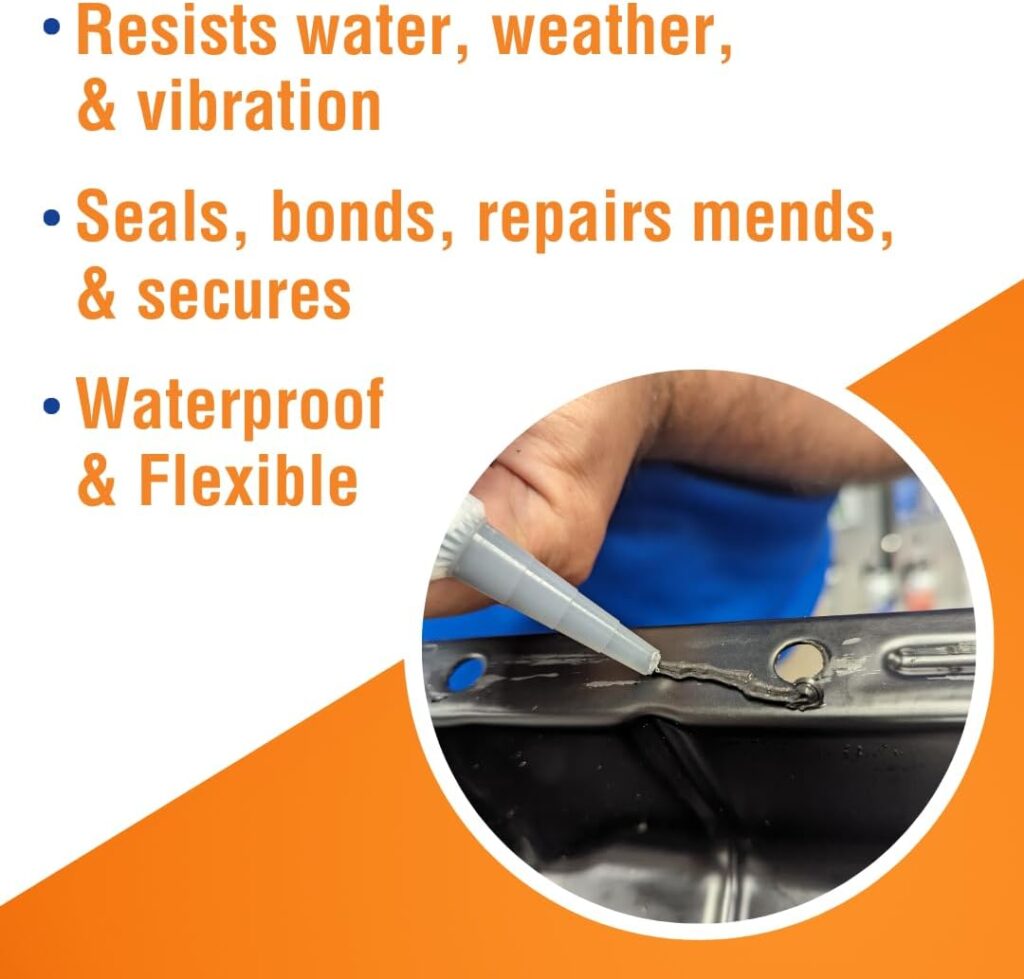
You’ll get better results by cutting the tube tip to the desired bead size and applying steady, consistent pressure. Smooth the bead with a tooling tool or a moistened finger (use gloves) within the toolable window for a neat finish and better contact.
Clamping and support
You’ll often need to clamp or support parts for at least 1 hour or until the silicone becomes firm, as the manufacturer notes. For heavier parts or where gravity can cause sagging, use temporary supports or fasteners to maintain contact until the silicone achieves sufficient tack.
Cure time expectations
You’ll see skin formation relatively quickly in normal conditions, but full cure is dependent on bead thickness and environmental humidity and temperature. Plan for 24 hours or more for complete cure in most household conditions; thicker beads or cooler/drier environments may require more time.
Cleanup and tooling
You’ll be able to clean uncured silicone with mineral spirits or isopropyl alcohol, though cured silicone must be removed mechanically. Keep a rag and solvent handy while you work to keep edges tidy, and use appropriate personal protective equipment.
Best use cases
You’ll find many situations where this sealant shines, so choose it for tasks that match its strengths. Here are common use cases and why the product is a practical choice.
Automotive sealing and gasket repair
You’ll use this for valve cover gaskets, oil pan sealant, and other engine bay jobs given its temperature tolerance and sensor-safe formulation. Remember to follow OEM recommendations and allow proper cure before engine operation in heat-critical applications.
Weather stripping and trim sealing
You’ll benefit from its flexibility when sealing weather strips, window channels, and exterior trim that need to move slightly without breaking the seal. The black color also helps conceal seams visually on darker surfaces.
Glass and metal bonding
You’ll find it suitable for small repairs where glass meets metal, such as certain automotive glass trim or household window repairs. Ensure surfaces are clean and supported until the sealant holds.
Vinyl tops and canvas repairs
You’ll appreciate the product’s compatibility with vinyl tops and fabric-style surfaces for patching and sealing. Test a discrete area first if colorfastness or surface reactions are a concern.
Marine and outdoor use
You’ll use it on boat trim, hatches, and non-continuous immersion areas thanks to its water and weather resistance. For permanent underwater joints, you should assess product suitability relative to marine-specific adhesives.
Pros and cons
You’ll want a candid summary to decide if this product is right for you. Below are the main advantages and limitations to consider.
Pros
You’ll get a product that is versatile, sensor-safe, and tolerant of wide temperature extremes. It’s easy to apply in small quantities, waterproof once cured, and remains flexible to tolerate vibration and movement.
Cons
You’ll face limitations when bonding some low-energy plastics without primer, and the small 3 oz tube may not be economical for larger jobs. Also, cure time can be influenced by conditions, so you may need to plan for longer setup or clamping depending on your environment.
Comparison with similar sealants
You’ll want to know how this Permatex sealant measures up against alternatives in terms of cost, performance, and features. Below are useful comparison points to help your decision.
Compared to high-temperature silicones
You’ll find that while the Permatex product has a significant temperature range, specialty high-temp silicones designed for continuous extreme heat (above 450°F) may outperform it. For most automotive and household needs, however, Permatex’s range is sufficient.
Compared to polyurethane sealants
You’ll notice silicone-based products like this one remain more flexible and resist weathering better than many polyurethanes. Polyurethane adhesives might have higher structural strength for bonding painted substrates, but they typically lack silicone’s temperature and UV stability.
Compared to marine-grade adhesives
You’ll find marine-specific adhesives are formulated for prolonged immersion and may include antifouling additives or enhanced saltwater resistance. Use Permatex for many marine tasks, but consult marine-specific products for continuous submersion or critical boat hull repairs.
Tips and best practices
You’ll get better results when you use a few practical techniques that experienced users rely on. These tips reduce waste, improve bond quality, and make the job easier.
Test-fit and mock-up
You’ll always benefit from a dry-fit of components before applying sealant; this avoids wasted product and ensures alignment. Mocking up the parts also tells you where to apply the bead for the best contact and minimal squeeze-out.
Use appropriate bead size
You’ll choose bead diameter based on gap size—too small a bead will starve the joint, while too large will waste material and slow curing. A neat, consistent bead size also makes finishing and tooling cleaner.
Warm the tube in cold weather
You’ll find that silicone flows better if you warm the tube gently in cold environments (don’t overheat). Warming in your hands or at room temperature for a short while helps extrusion and smoother application.
Store properly
You’ll preserve unused material by sealing the tube tip carefully and storing it in a cool, dry place. For longer storage, wrapping the nozzle in plastic and sealing with tape keeps oxygen out and slows skin formation.
Safety and handling
You’ll want to handle the product safely and be aware of important precautions before you apply it. The following safety notes help keep you and your workspace safe.
Ventilation
You’ll use the sealant in well-ventilated areas to avoid inhaling any volatiles released during curing. While cured silicone is inert, solvents and uncured materials can emit odors and small amounts of reactive chemicals.
Skin and eye protection
You’ll wear gloves and eye protection when tooling and applying the product to avoid direct contact. If silicone gets on your skin, wash it off with soap and water before it cures, and do not use aggressive solvents on skin.
Disposal
You’ll dispose of cured silicone as non-hazardous solid waste per local regulations; uncured product may be subject to different disposal rules. Check local guidelines for adhesive products and packaging disposal.
Frequently asked questions (FAQs)
You’ll likely have some specific questions before you buy or use this product; here are common queries and concise answers.
Is Permatex 81158 safe for oxygen sensors?
You’ll see it labeled sensor-safe, which indicates the cured product is formulated to avoid contaminating oxygen sensors. For sensitive emission-related components, follow manufacturer instructions and allow full cure where recommended.
How long until it fully cures?
You’ll get a skin in minutes to an hour depending on conditions, and full cure is typically around 24 hours for standard bead sizes under normal humidity and temperature. Thicker beads or cooler, drier conditions will extend cure time.
Can it be painted?
You’ll find that painting over silicone can be challenging since many paints won’t adhere to cured silicone. If painting is required, use a paint or primer specified for silicone or tape off areas where you need paint adhesion.
Will it stick to polyethylene or polypropylene?
You’ll probably need a primer or special surface treatment for low-energy plastics like polyethylene or polypropylene because typical silicone adhesives struggle to bond reliably. Test a small area or consult manufacturer guidance for such materials.
Is it suitable for continuous underwater use?
You’ll use it for splash and weather exposure reliably, but for continuous immersion or underwater structural joints you should consult marine-grade sealants designed for those conditions. This product is better suited to non-continuous or intermittent contact with water.
Troubleshooting common issues
You’ll encounter a few common problems that are easy to fix if you know what to look for. These troubleshooting tips keep your project moving.
Poor adhesion
You’ll re-check surface preparation if adhesion is weak—clean, dry, and abraded surfaces usually bond much better. Also consider whether the substrate is a low-energy plastic that may need priming.
Excessive squeeze-out
You’ll control squeeze-out by using tape to mask edges and applying a steady bead rather than overloading gaps. Tool the bead immediately and remove excess with a rag and solvent before it skins over.
Slow curing
You’ll speed curing by ensuring room temperature and humidity are adequate; silicone cures faster in warmer, more humid conditions. If you’re in a cold, dry environment, allow additional cure time for the product to reach full strength.
Who should buy this product
You’ll find this product appealing if you want a small, convenient tube of general-purpose silicone for automotive, home, or marine jobs. It’s ideal for hobbyists, DIYers, and professionals who need a sensor-safe, temperature-tolerant black sealant for a variety of applications.
Recommended for:
You’ll appreciate it if you’re doing valve cover or small engine area repairs, weather stripping fixes, vinyl top repairs, or general exterior trim sealing. The 3 oz tube size is handy for single repairs and trial usage.
Not recommended for:
You’ll skip this product if you need an industrial-sized supply for ongoing manufacturing or long continuous underwater repairs. You should also avoid it for critical bonding of low-energy plastics without appropriate primers.
Final verdict
You’ll find Permatex 81158 Black Silicone Adhesive Sealant to be a versatile, user-friendly choice for many seal-and-bond tasks where a black, sensor-safe silicone is appropriate. Its wide temperature tolerance, weather resistance, and flexibility make it a good fit for automotive and general household repairs, but you should account for its limitations on certain plastics and plan for proper curing and clamping as specified. If you need a small tube for occasional use and value sensor-safe properties, this product is worth trying.
Disclosure: As an Amazon Associate, I earn from qualifying purchases.