

Have you been looking for a fast, reliable way to check GFCI outlets and wiring errors with a clear, easy-to-read display?

Product Overview
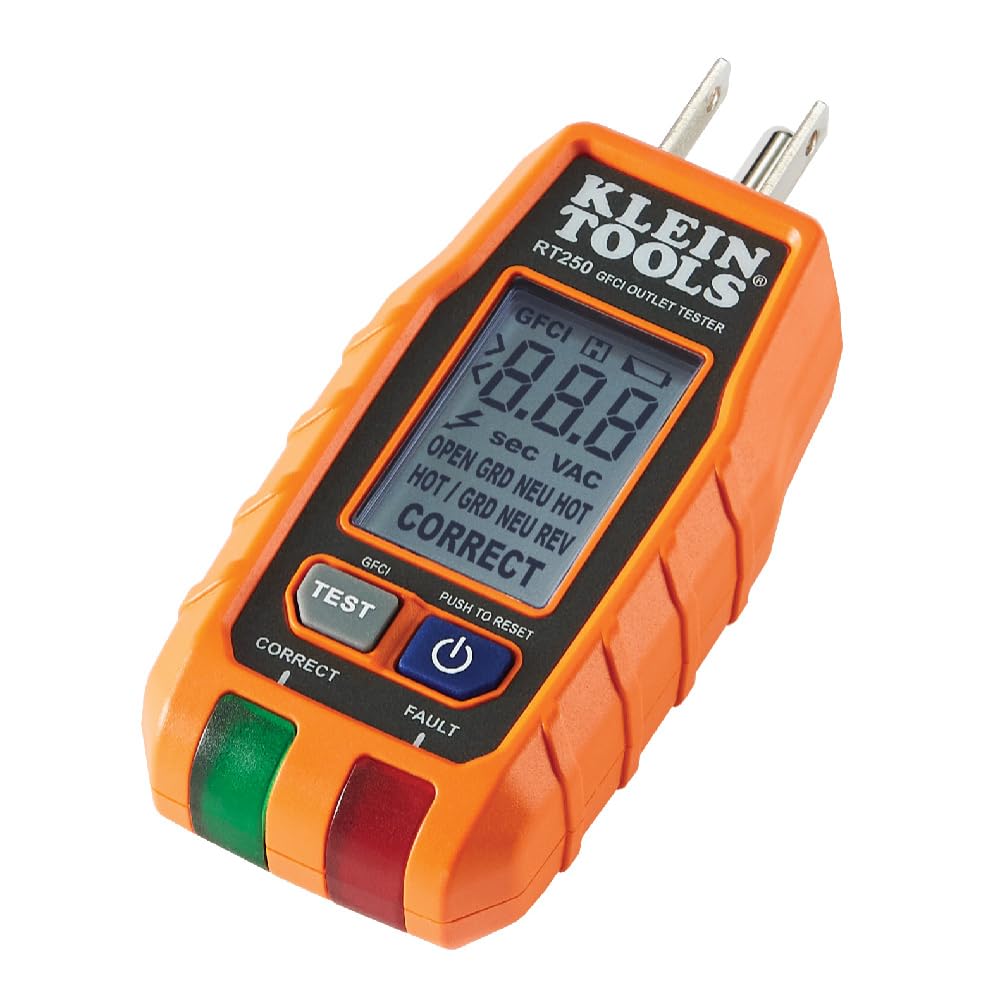
You’re looking at the Klein Tools RT250 GFCI Outlet Tester with LCD Display, Electric Voltage Tester for Standard 3-Wire 120V Electrical Receptacles. This tester combines a traditional plug-in wiring tester with an LCD that shows voltage and GFCI trip time, making your checks more informative than a simple three-light tool. It’s built for quick diagnostics at job sites, around the house, or when you need to verify outlet safety before connecting equipment.
What this tester does for you
The RT250 identifies common wiring faults and gives you a visible trip-time measurement when testing GFCI outlets. You’ll be able to read voltage on the backlit LCD, confirm wiring condition via bright LEDs, and hold the reading for hard-to-reach receptacles with the Auto-Hold feature. That lets you work faster and with more confidence when validating outlet safety.
Who it’s designed for
This tester is intended for electricians, maintenance technicians, and savvy homeowners who want a straightforward way to verify 120V three-prong receptacles and GFCI functionality. You’ll appreciate the faster troubleshooting and clearer readout compared with basic three-LED testers.

Klein Tools RT250 GFCI Outlet Tester with LCD Display, Electric Voltage Tester for Standard 3-Wire 120V Electrical Receptacles
Key Features at a Glance
You’ll want a quick snapshot of what makes this tool useful, so here are the major features in plain terms. Each feature chips away at uncertainty you often face when assessing receptacle wiring safety.
Feature summary
- Clear backlit LCD readout for voltage and trip time.
- GFCI trip time display to show how quickly a GFCI responds.
- Detects common wiring faults including open neutral and open ground.
- Patent-pending detection for Open Neutral & Open Ground.
- Auto-Hold function for hard-to-reach outlets.
- Bright green and red LEDs for instant visual wiring indicators.
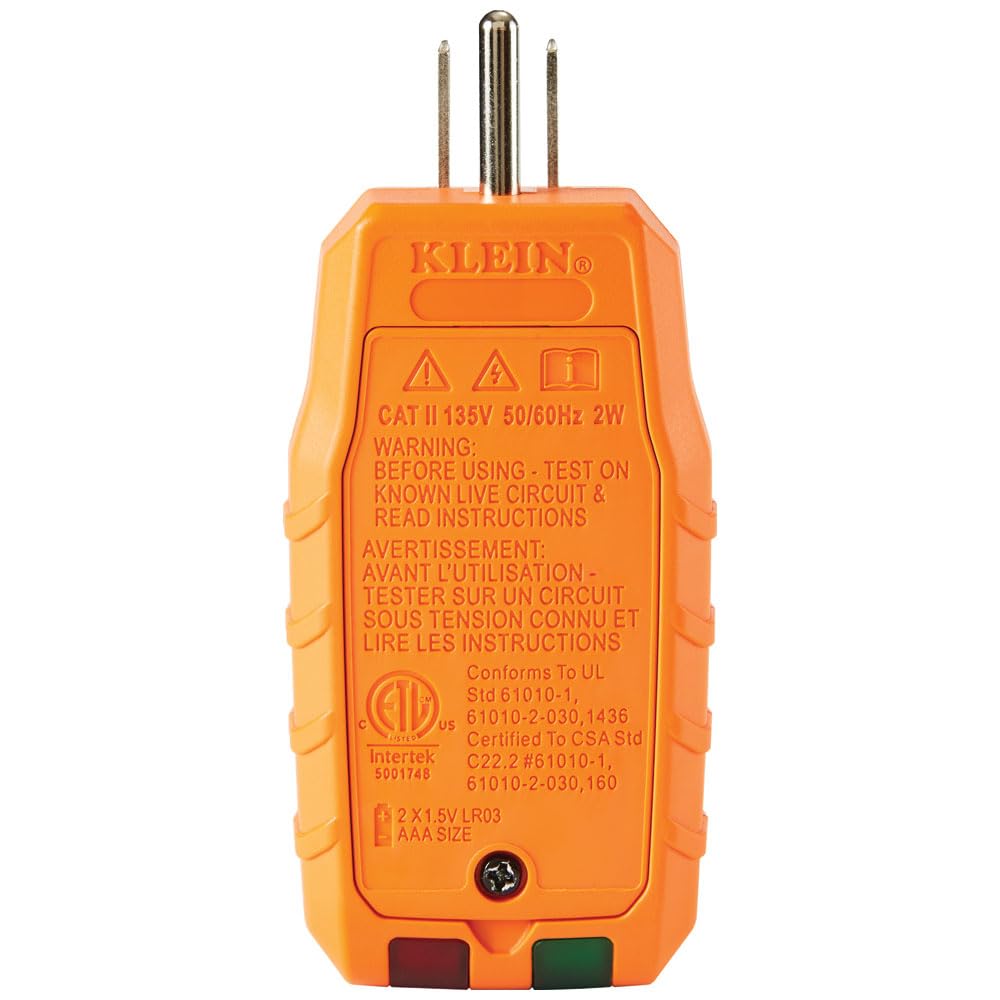
- CAT II 135V safety rating suitable for typical building wiring tasks.

Feature Breakdown Table
You’ll find it easier to compare what each feature actually means when it’s laid out. Use this table to understand capabilities and how they translate into real-world value.
| Feature | What it means for you | Practical benefit |
|---|---|---|
| Backlit LCD Readout | Displays measured voltage and GFCI trip time | You can read values in dim lighting and get numeric feedback instead of guessing from LED patterns |
| GFCI Trip Time Display | Shows the time (ms) it takes for the outlet’s GFCI to trip after pressing the test | You can verify whether the GFCI trips within acceptable safety limits |
| Wiring Fault Detection | Identifies common wiring errors like open neutral, open ground, and reversed hot/neutral | You’ll know exactly what to fix or report rather than only knowing something’s wrong |
| Patent-pending Open Neutral & Open Ground detection | Additional logic to detect these two conditions reliably | Reduced false readings and quicker troubleshooting of grounding or neutral issues |
| Auto-Hold | Holds the reading for you after testing | You can read results away from the outlet, or when the LCD is hard to see at the socket |
| LED Indicators | Bright green/red LEDs for quick visual status | Fast, no-fuss confirmation at a glance before or after deeper testing |
| CAT II 135V Safety Rating | Designed for testing single-phase receptacle circuits up to specified limits | Safer handling for most building wiring outlet checks |
Design and Build Quality
You’ll notice Klein Tools’ familiar sturdy feel in the RT250, designed for job site use and frequent handling. The housing is compact and shaped to plug into standard three-prong outlets without wobbling, and the plug pins are sized and spaced for reliable contact.
Materials and durability
The tester uses a durable plastic housing that resists drops and typical wear. You’ll find it feels solid in your hand and robust enough to toss into a tool bag with confidence. The buttons and connectors are designed for repeated use over years, which is what you need if you test multiple outlets daily.
Size and portability
The RT250 is small and lightweight, making it easy to carry in a pocket or tool pouch. You’ll appreciate that it doesn’t take up much space, but still presents a readable LCD and clear LEDs, balancing portability and usability.
Display and User Interface
You’ll get more than simple LED indications—this tester’s LCD gives you numeric feedback that helps reduce guesswork. The backlit display and Auto-Hold function make the interface practical in the field.
LCD characteristics
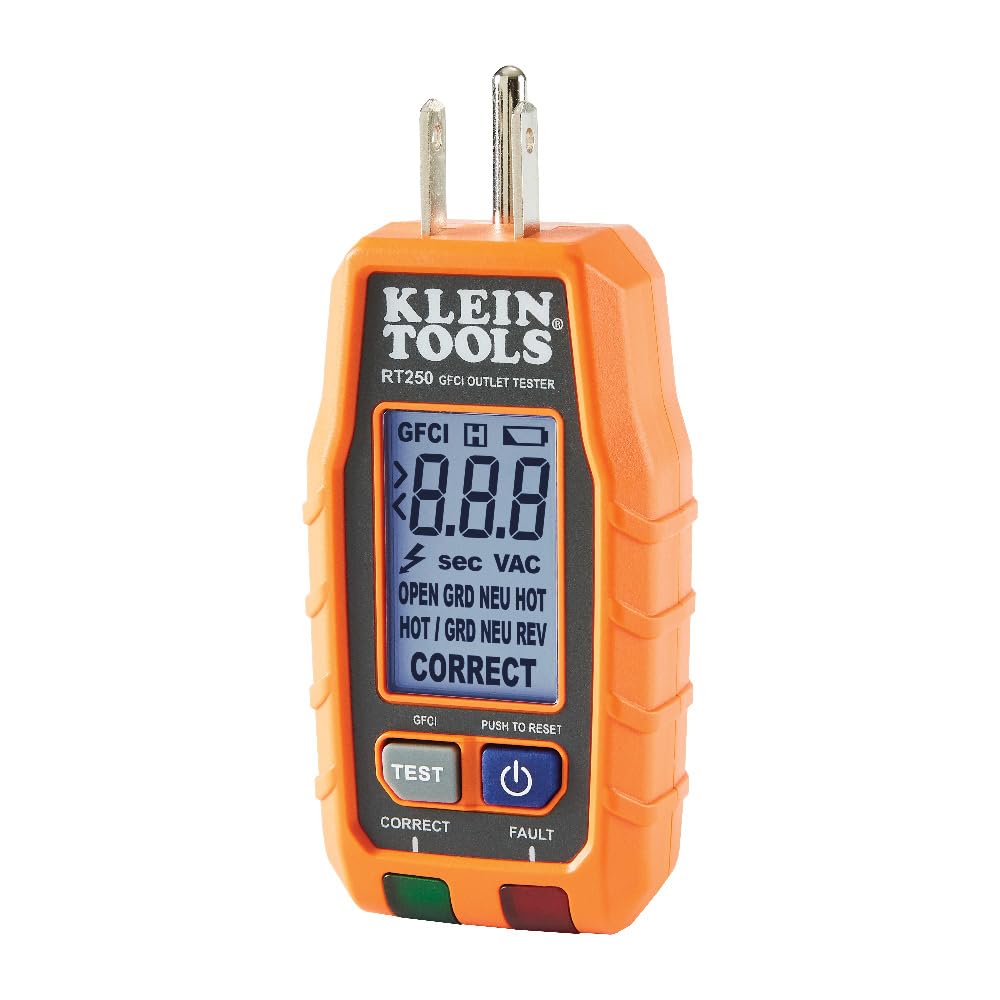
The backlit LCD provides clear voltage readouts and shows the trip time when you test GFCIs. You’ll be able to take measurements in low-light environments and see exact millisecond values for GFCI trip events, giving more detail than standard LED-only testers.
LEDs and visual cues
The bright green and red LEDs remain on the unit to provide instant wiring condition feedback alongside the LCD. You’ll often look at the LEDs for a quick pass, then check the LCD for precise voltage and trip-time values if something looks off.
Accuracy and Performance
Accuracy matters when you’re verifying safety devices and wiring. The RT250 focuses on giving practical, actionable information rather than lab-grade measurements.
Voltage measurement
You’ll get a clear voltage readout for typical 120V receptacles, useful for confirming presence of power, low-voltage conditions, and significant drops. The LCD readout is more informative than color-only LED patterns because it gives a specific number you can use for diagnostics.
GFCI trip-time testing
When you press the test to trip a GFCI, the LCD displays how long it takes the device to interrupt the circuit. You’ll use this to verify that a GFCI trips quickly enough to meet safety expectations and to spot devices that are slow or might be failing.
Safety Features and Ratings
You should always consider safety when working with electrical testers. Klein Tools provides an appropriate rating and design features for standard receptacle testing.
CAT II 135V rating
This tester has a CAT II 135V safety rating, which means you can safely test local mains-connected devices like household outlets and appliances within that category. You’ll find this suitable for routine receptacle checks, but it’s not intended for high-energy distribution or industrial higher-category testing.
Built-in protective design
The tool’s design includes insulated housing and secure plug contacts, which reduce exposure to energized parts. You’ll still follow safe practices—keep your hands clear of the contacts while in use and test in a controlled manner.
How to Use the RT250 — Step-by-Step
You can get reliable readings by following a consistent process. These steps help ensure you test correctly and interpret results properly.
Basic receptacle check
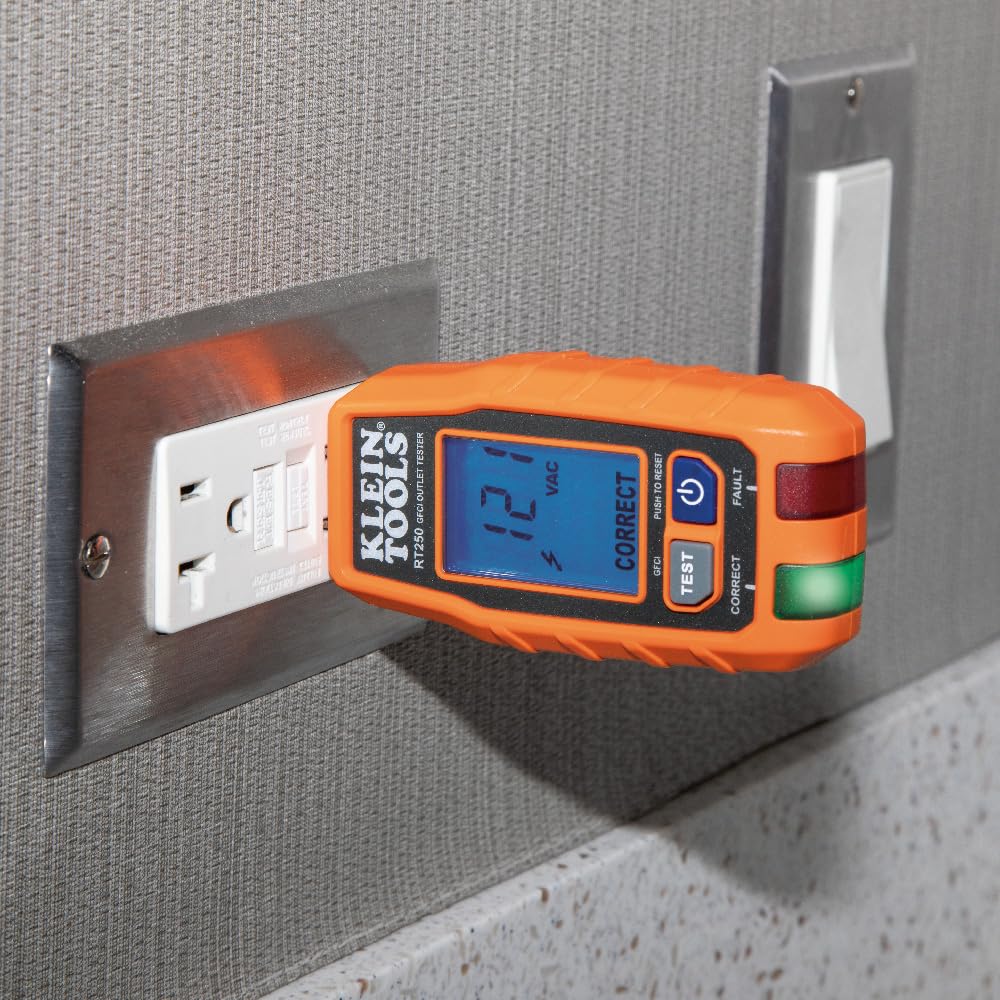
- Plug the RT250 into the three-prong 120V outlet.
- Observe the backlit LCD for voltage and check the LED indicators for wiring status.
You’ll quickly see whether power is present, whether wiring is likely correct, and whether there are immediate faults like open ground.
GFCI trip-time test
- Plug the tester into the GFCI-protected outlet.
- Press the tester’s built-in GFCI test button (if present) or use the outlet’s test button while observing the tester’s trip-time readout.
- The LCD will display the time it took for the GFCI to trip.
You’ll use that number to assess responsiveness; a longer-than-expected trip time may indicate a problem.
Using Auto-Hold
When working with outlets in awkward positions, press the Auto-Hold feature or allow it to engage automatically. You’ll then move the tester or step back to read the captured value on the LCD without worrying about the display disappearing.
Interpreting Results
You’ll need to translate the LCD readouts and LED status into actionable steps. Here’s how to interpret common outcomes.
Normal, expected readings
If the LCD shows approximately 120V and the LEDs indicate correct wiring, your outlet is likely wired and functioning properly. You’ll be able to use equipment safely, though further testing by a professional may still be warranted for critical systems.
Common fault indications
- Open ground: The LEDs or LCD will indicate missing grounding. You’ll want to avoid using equipment that requires grounding until the issue is fixed.
- Open neutral: The device may show voltage anomalies or the specific open neutral indication. You’ll want to repair this promptly to prevent equipment damage or shock risk.
- Reversed hot/neutral: This can create unsafe conditions for certain devices; you’ll need to correct wiring polarity.
GFCI fails to trip or shows slow trip time
A GFCI that doesn’t trip or trips slowly might be defective or improperly wired. You’ll disconnect the load, avoid using that circuit for sensitive tools, and consider replacement or further testing by a licensed electrician.
Troubleshooting Tips
When you get unexpected results, these practical steps help you confirm or narrow down the issue.
When the display is blank or won’t turn on
Ensure the outlet actually has power by plugging in a known-good device. You’ll confirm whether the tester or outlet is the issue. If power is present and the tester is blank, the unit could be faulty.
When you see odd voltage readings
Try the tester in another outlet to compare. You’ll learn whether a single outlet is behaving oddly or whether there’s a broader supply issue. Check for loose connections or multi-outlet problems like shared neutrals.
When a GFCI won’t trip
Confirm the GFCI’s test button on the outlet functions. You’ll also verify the test is applied correctly and consider removing loads that could affect the trip test. If the outlet fails both the tester and the built-in button, replacement or repair is needed.
Maintenance and Care
You’ll get the most life out of the tester by handling it properly and performing simple maintenance.
Cleaning and storage
Wipe the tester’s housing and LCD with a soft, dry cloth; avoid solvents or abrasive cleaners. You’ll keep it in a cool, dry place and store it away from corrosive materials, grime, and heavy impacts.
Periodic checks
If you use the tester frequently, compare its readings against a calibrated reference tool occasionally. You’ll ensure it remains consistent and reliable for routine diagnostics.
Pros and Cons
You’ll want a clear balancing of strengths and limitations before deciding to buy the RT250.
Pros
- Clear LCD readout with voltage and GFCI trip-time information makes diagnostics more precise.
- Auto-Hold and backlighting improve usability in awkward or dark places.
- Patent-pending detection logic for open neutral/open ground increases confidence in fault identification.
- Compact and durable design suitable for fieldwork and home maintenance.
- Bright LEDs provide quick visual confirmation alongside numeric data.
Cons
- Designed specifically for standard 3-wire 120V receptacles, so it’s not suitable for higher-voltage or specialty outlets.
- CAT II 135V rating limits use to certain categories of testing—don’t use it for distribution-level diagnostics.
- It’s a diagnostic tester rather than a full diagnostic instrument; you may still need a multimeter or clamp meter for deeper electrical analysis.
Comparing the RT250 to Basic 3-Light Testers and Multimeters
You’ll find this tester sits between simple LED-only testers and full multimeters in terms of capability and convenience.
Versus 3-light testers
Three-light testers are cheap and compact but only give a blind pattern indicating wiring conditions. The RT250 gives you numeric voltage and a trip-time readout, so you’ll know more about how quickly a safety device operates and get exact voltage values rather than pattern guesses.
Versus multimeters
Multimeters provide precise voltage, current, and resistance measurements but require more knowledge to use safely for outlet checks. You’ll find the RT250 simpler for quick receptacle verification with immediate visual cues and GFCI testing capabilities that aren’t as straightforward on a multimeter.
Practical Use Cases
You’ll find multiple situations where the RT250 improves speed and confidence for outlet checks.
Residential inspections and maintenance
When you’re assessing outlet safety in homes, the RT250 helps identify wiring faults and GFCI responsiveness quickly. You’ll be able to document trip times and voltages during a walk-through.
Contractor and electrician quick checks
On the job, you’ll use the RT250 for fast verification before energizing circuits or handing over installations. The numeric display saves time when recording conditions for clients.
Facility and safety audits
During routine safety checks in facilities, you’ll benefit from consistent trip-time measurements and clearer fault identification than a basic tester offers. You’ll be able to flag outlets that require repair.
Who Should Buy This Tester
If you need a portable, easy-to-read tool for 120V receptacle and GFCI testing, this unit is a strong match. You’ll want it if you’re a professional tradesperson, facilities manager, or a homeowner who values more precise feedback than LEDs alone.
Not ideal for:
You should avoid relying on this tester as your only electrical tool if you need to measure current, perform in-depth circuit diagnostics, or test higher voltage systems. You’ll still want a multimeter and other specialist tools for those tasks.
Buying Considerations
When choosing whether to purchase, consider how you’ll use the tester and what your testing needs are.
Price vs. functionality
You’ll pay more than for a basic three-light tester, but you’ll gain LCD readouts, trip-time display, and more reliable fault detection. If you value faster, clearer diagnostics, the extra cost often pays off quickly in saved troubleshooting time.
Complementary tools
Consider pairing the RT250 with a quality multimeter and personal protective equipment (PPE) if you frequently perform detailed electrical work. You’ll then have both quick checks and in-depth measurement capability.
FAQ — Frequently Asked Questions
You’ll likely have questions about the RT250’s limits and common use cases. Here are practical answers to those recurring queries.
Can the RT250 test 240V outlets?
No, the Klein Tools RT250 is designed for standard 3-wire 120V electrical receptacles. You’ll need specialized testers for higher-voltage 240V circuits.
Is the tester safe for professional use?
Yes, it carries a CAT II 135V safety rating appropriate for testing single-phase receptacle circuits and household outlets. You’ll still follow standard safety protocols when testing energized outlets.
Does the RT250 measure current (amps)?
No, it measures voltage and displays GFCI trip time but does not measure current. You’ll need a clamp meter or multimeter with current capability for amp measurements.
What does “trip time” tell me?
Trip time indicates how long a GFCI takes to interrupt a circuit after sensing imbalance. You’ll use it to determine whether the device responds quickly enough to provide protection.
Can it diagnose every wiring problem?
The RT250 detects many common wiring faults, including open neutral and open ground, but it’s not a complete diagnostic system. You’ll still run more advanced tests if you suspect complex wiring issues or intermittent faults.
Real-World Tips for Best Results
You’ll get the most accurate diagnostics by using the tester carefully and consistently. Here are practical, field-proven tips.
Test known-good outlets first
Before diagnosing an unknown outlet, test a verified good outlet to confirm the tester reads normally. You’ll avoid misdiagnosing a working outlet as faulty due to a tester issue.
Use Auto-Hold in tight spaces
When testing outlets under cabinets or behind equipment, Auto-Hold keeps the reading visible while you move to a better viewing position. You’ll avoid the frustration of missed or fleeting displays.
Keep a record of trip times
If you manage multiple outlets, log trip times and locations to identify trends or specific problem circuits. You’ll detect slow-tripping GFCIs early and prioritize replacements.
Final Recommendation
You’ll find the Klein Tools RT250 GFCI Outlet Tester with LCD Display, Electric Voltage Tester for Standard 3-Wire 120V Electrical Receptacles a practical upgrade from LED-only testers. It gives you clear voltage readings, GFCI trip-time info, and reliable detection of common wiring faults including open neutral and open ground. If your work regularly involves verifying outlet safety or you want clearer diagnostics without straying into complex instrument use, this tester adds value through speed, clarity, and ease of use.
You’ll still keep a multimeter and other diagnostic tools on hand for advanced troubleshooting, but for routine outlet and GFCI checks this unit offers an effective balance of features, portability, and job-site durability.
Disclosure: As an Amazon Associate, I earn from qualifying purchases.