

?Are you trying to decide whether the Klein Tools 69149P Electrical Test Kit with Digital Multimeter, Non-Contact Voltage Tester and Electrical Outlet Tester, Leads and Batteries is the right kit for your toolbox?

Product Overview
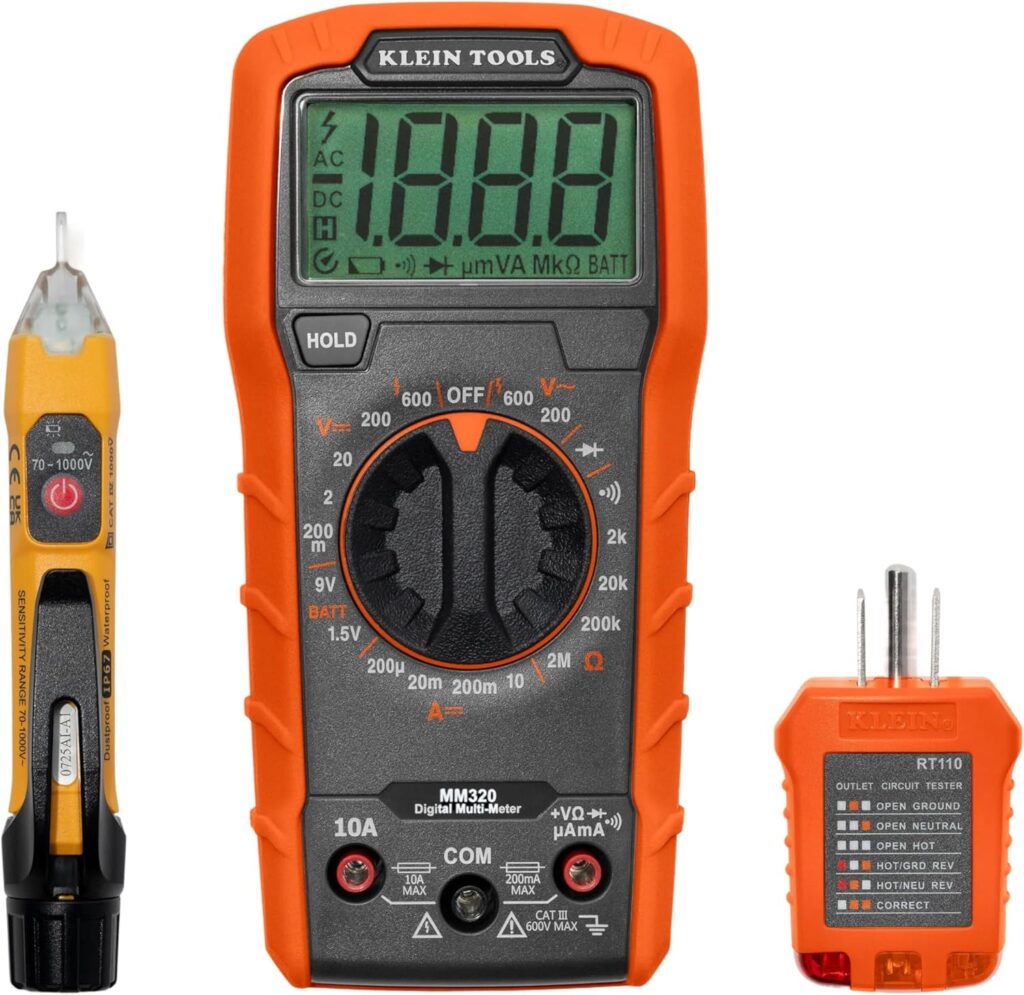
You’ll find that this kit bundles three commonly used electrical testers into one compact package, so you can cover a wide range of basic diagnostic tasks without buying separate tools. The kit centers on a Klein MM320 multimeter, an NCVT1XT non-contact voltage tester, and an RT110 receptacle tester, plus test leads and batteries, making it a practical starter kit for homeowners, electricians, and maintenance techs.
What’s Included
You get the MM320 digital multimeter, the NCVT1XT non-contact voltage tester, and the RT110 outlet/receptacle tester, along with test leads for the multimeter and batteries for the multimeter and NCVT. Everything is ready to use out of the box, so you won’t need to hunt for cells or probe wires before performing basic checks.
Key Features
The MM320 measures up to 600V AC/DC voltage, 10A DC current, and resistance up to 2 MΩ, and supports continuity testing with both visual and audible indicators. The NCVT1XT offers non-contact voltage detection with a bright LED and audible tone that triggers when voltage is present (sensitive roughly in a 50 to 1000 VAC range), while the RT110 checks common receptacle wiring faults and indicates correct wiring.

Klein Tools 69149P Electrical Test Kit with Digital Multimeter, Non-Contact Voltage Tester and Electrical Outlet Tester, Leads and Batteries
$39.99 In Stock
MM320 Digital Multimeter — Core Meter Review
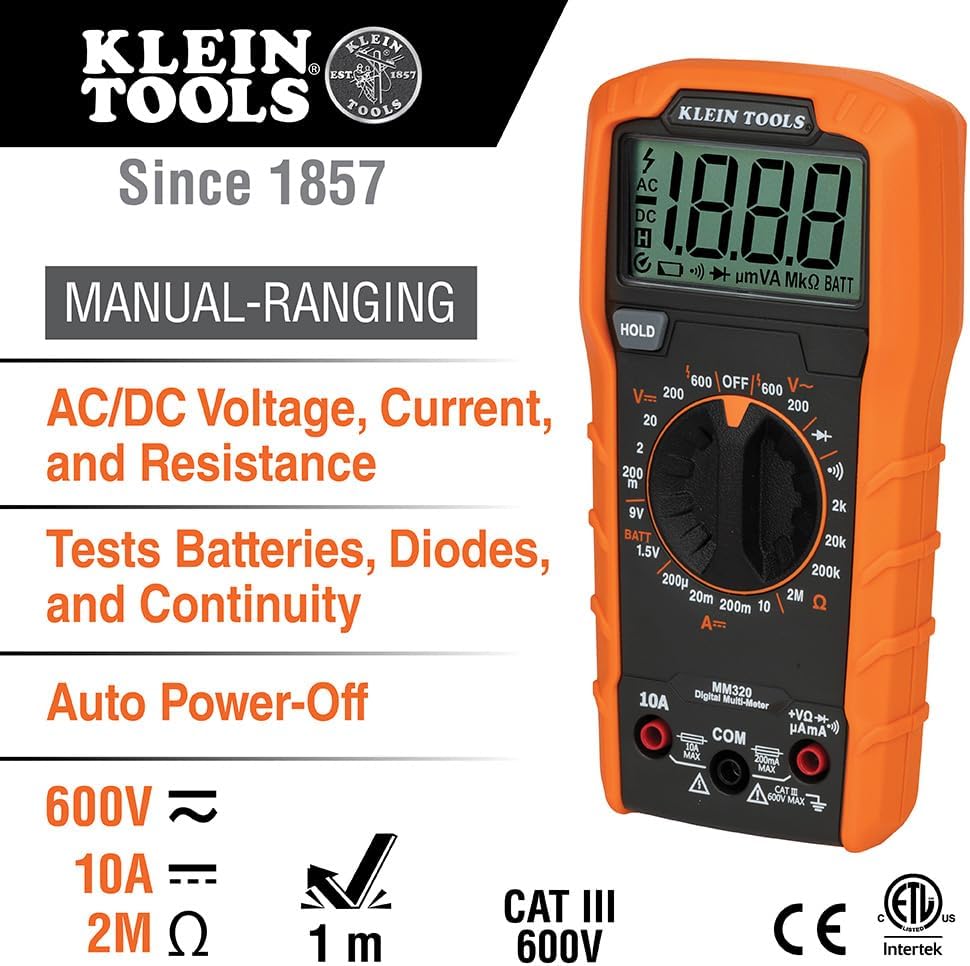
You’ll use the MM320 for voltage, current, resistance, and continuity tasks most often, and it’s the most versatile instrument in the kit. It’s designed to handle everyday troubleshooting and verification tasks without being overly complicated for occasional users.
Features & Specs
The MM320 is rated for measurements up to 600V AC/DC, up to 10A DC current, and resistance up to 2 MΩ. It includes continuity testing with both a visual LED and an audible beep, which helps you confirm circuit connections even when you can’t see the display.
Performance & Accuracy
For routine electrical work, the MM320 performs reliably and produces quick, readable results that are consistent with what you need to decide whether a circuit is live or a component is open. It’s not a lab-grade meter, so if you need high-precision calibration-level readings for fine electronics, you may want a higher-accuracy instrument; for general electrical and troubleshooting tasks, it’s more than adequate.
Tips for Using the MM320
Always start by selecting the correct measurement mode and range to avoid blown fuses or misreads, and plug the test leads into the correct jacks (COM and V/Ω typically) before testing live circuits. Use the audible continuity indicator to speed up checks on outlets, switches, and fuses, and keep the meter’s battery fresh to avoid inconsistent readings.

NCVT1XT Non-Contact Voltage Tester — Hands-Off Voltage Check
When you need to know whether a wire, outlet, or device is energized without touching the conductor, you’ll pick up the NCVT1XT. It gives you a fast, non-invasive readout via a bright LED and an audible tone when voltage is sensed.
Features & How It Works
The NCVT1XT lights a bright indicator showing it’s powered, and when it detects voltage the LED changes to red and an audible tone sounds to alert you. It’s designed for non-contact detection, so you can test insulation-covered wires and outlet faces safely without exposing live circuits.
Sensitivity & Range
Klein specifies the NCVT1XT as detecting voltage roughly in the 50 to 1000 VAC range, which covers most household and commercial AC power scenarios. This broad range means you can pick up from low line voltages to higher distribution voltages, but keep in mind non-contact testers can be influenced by proximity, orientation, and nearby energized conductors.
Tips for Using NCVT1XT
Move the tip of the tester slowly along the cable or outlet face to ensure you get the strongest response, and verify a known live source before and after testing to confirm the tester’s function. Remember that non-contact testers indicate the presence of electric fields and do not quantify voltage magnitude with high accuracy, so use a multimeter when you need a precise value.
RT110 Receptacle (Outlet) Tester — Quick Outlet Checks
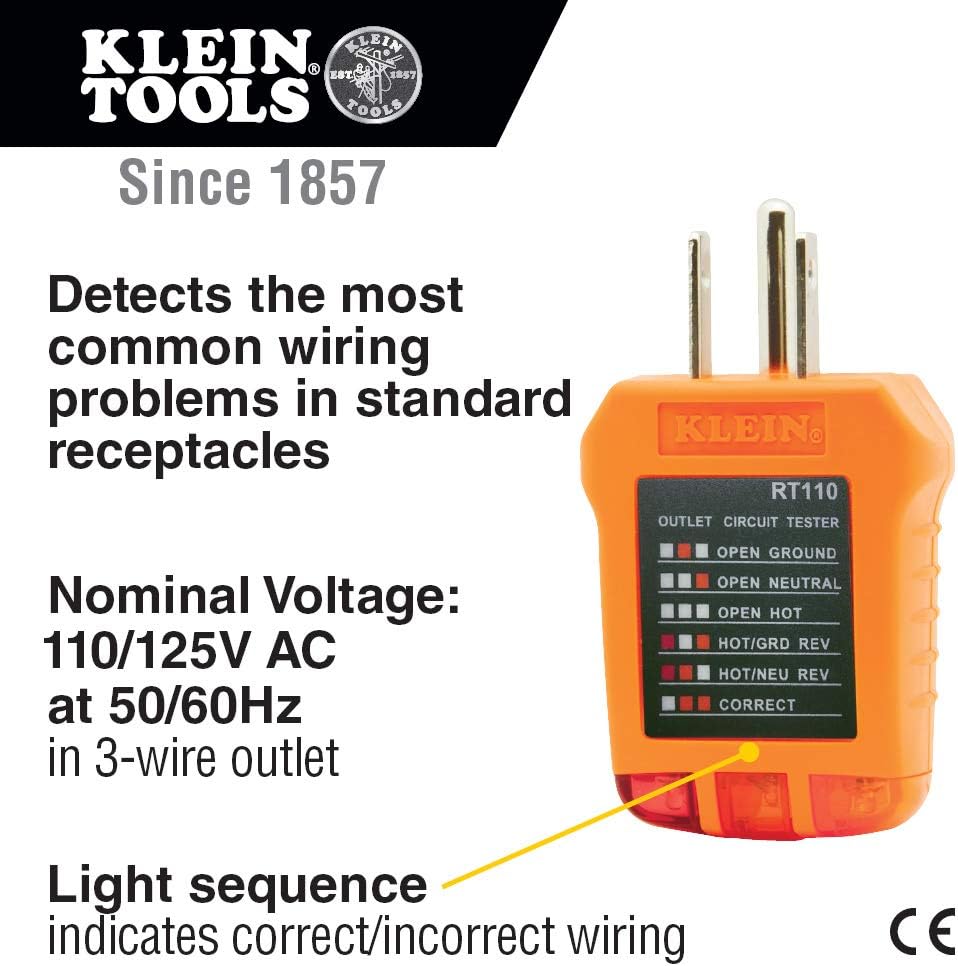
You’ll use the RT110 to quickly verify basic outlet wiring and find common faults that can be addressed promptly without complicated diagnostics. It’s a simple plug-in device that illuminates a pattern of LEDs to indicate specific wiring conditions.
What It Detects
The RT110 identifies correct wiring and common wiring faults such as open ground, open hot, open neutral, and hot/ground reversed. It will show you a “correct” indication when wiring is standard, giving you confidence that the outlet is wired safely for use.
Limitations
The RT110 does not detect every possible wiring issue, and it won’t identify more complex faults such as multi-wire branch circuit problems, shared neutrals under load, or certain intermittent faults. Use it as a fast screening tool; if the RT110 shows a problem or if you suspect a subtle issue, follow up with the MM320 and proper circuit diagnostics.
Using the RT110 Safely
Before testing, be sure the outlet is not damaged or physically unsafe to plug into; if you see cracked plates or scorch marks, do not risk inserting the tester. When the tester indicates a fault, de-energize the circuit and follow proper lockout/tagout and inspection procedures before attempting repairs.

Accessories: Test Leads and Batteries
You won’t have to scramble for probes or cells because Klein includes test leads for the MM320 and batteries for both the MM320 and NCVT1XT. These accessories let you use the tools immediately and avoid the frustration of missing parts.
Test Leads
The included leads are designed to work with the MM320’s jacks and provide a secure connection to the circuit under test, with standard insulated probes. If you perform tougher work or need extra reach and protection, you can upgrade to higher-rated leads with thicker insulation and additional safety ratings.
Batteries
Klein supplies batteries for the NCVT1XT and MM320, ensuring you can start testing right away without hunting for cells. Replace batteries promptly when low-battery indicators appear to maintain measurement accuracy and the tester’s audible/visual functionality.
Technical Specifications
You’ll want a concise reference table for the kit’s key capabilities so you can match it to your tasks and expectations. Below is a table that breaks down the main specs for the kit’s components.
| Component | Measurement / Detection Range | Indicators | Included Accessories |
|---|---|---|---|
| MM320 Digital Multimeter | Up to 600V AC/DC, 10A DC, Resistance to 2 MΩ | Digital display, Audible + visual continuity | Test leads, battery included |
| NCVT1XT Non-Contact Voltage Tester | Approx. 50–1000 VAC non-contact detection | Bright LED (changes to red), Audible tone | Battery included |
| RT110 Receptacle Tester | Detects wiring patterns for outlets | LED pattern indicators | None required (plug-in device) |
These summarized specs help you quickly see what each tool covers and whether the ranges meet your expected use cases. If you need additional technical details beyond this table, check Klein’s official documentation for calibration, safety ratings, and any updates.
Performance in Real-World Tasks
You’ll find that this kit is optimized for fast troubleshooting, verification, and basic maintenance. It’s particularly strong for everyday tasks where you need reliable go/no-go answers rather than laboratory-level precision.
Residential Electrical Work
For residential jobs—like testing outlets, tracking down tripped circuits, or checking switches—the MM320 and RT110 pair well to give you a quick diagnosis and a follow-up measure for confirmation. The NCVT1XT is invaluable for doing a safety sweep before starting work, because you can confirm whether conductors are live without removing insulation or opening junctions.
Commercial/Industrial Use
In light commercial settings, the kit covers many common checks, but you’ll want to be mindful of the MM320’s 10A DC current rating and the NCVT1XT’s non-contact behavior when working with industrial controls and multi-phase systems. For heavier industrial diagnostics or higher current measurements, consider a meter rated for higher current and industrial-grade safety standards.
Ease of Use and Ergonomics
You’ll appreciate tools that make testing intuitive, and Klein keeps controls straightforward so you can get fast answers. The MM320’s rotary dial and the simple push-button operation of the NCVT1XT let you concentrate on the circuit rather than wrestling with settings.
Display and Controls
The MM320 uses a clear digital display for readings and has a continuity function with audible feedback, which helps when you can’t watch the screen. The NCVT1XT’s bright LED and beep are designed for immediate recognition, and the RT110’s LED pattern is straightforward for quick outlet assessments.
Portability and Storage
Because the tools are compact, you can store them in a small pouch or your service bag without adding significant weight. The kit’s portability makes it easy to carry from one job to the next, and the included test leads tuck away neatly when not in use.
Safety and Compliance
You’ll want to follow safe testing practices and understand tool limitations, and Klein’s tools in this kit are built to help you do that. Use the non-contact tester for initial checks and the multimeter for confirmatory measurements while observing electrical safety norms at all times.
Built-in Safety Features
The MM320 includes standard protections like fused current inputs (where applicable) and insulated probes help reduce accidental contact risk. The NCVT1XT’s non-contact design prevents you from having to touch live conductors, and the RT110 lets you avoid unnecessary probe insertion into outlets when checking wiring.
Recommended Safety Practices
Always verify that the tool is functioning properly on a known live source before starting work, and follow lockout/tagout procedures when de-energizing circuits for repairs. Wear appropriate personal protective equipment (PPE), stand on insulating mats when required, and never rely solely on non-contact detection for making safe-to-touch decisions.
Durability and Build Quality
You’ll notice the tools feel solid and are designed for regular field use, with housings that resist typical job-site bumps and scrapes. Klein has a long reputation for producing rugged hand tools, and their testers are built with similar practical durability.
Materials and Construction
The testers use molded plastic housings and rubberized grips where appropriate to aid handling and impact resistance; test leads use standard insulation for everyday use. While not indestructible, they withstand normal drops and knocks encountered during routine work.
Long-Term Reliability
If you use the kit for routine maintenance and troubleshooting, it should hold up well for years, provided you treat it properly and replace batteries as needed. For heavy daily industrial use in harsh environments, periodic checks and possible replacement of leads or the NCVT tip may be necessary.
Comparison with Other Kits
You’ll find competing kits from other brands that emphasize precision, ruggedized construction, or advanced features, but Klein’s 69149P strikes a middle ground for value and functionality. It’s aimed at people who need dependable tools for everyday electrical work without paying a premium for industrial or lab-grade instruments.
Value vs. Premium Brands
Compared with premium brands that carry higher price tags, this Klein kit gives you core functionality at a friendlier cost, making it a good choice if you want reliable tools without investing in top-tier instrumentation. Premium models may offer higher measurement accuracy, CAT III/CAT IV ratings or enhanced current ranges—features that matter if you work on high-energy distribution systems.
Alternatives to Consider
If you frequently work on high-current circuits, multi-phase systems, or require tight tolerance measurements, consider a meter with higher input protection and a broader current range. For portable non-contact detection with additional sensitivity options, alternative testers from other reputable brands might offer adjustable sensitivity or a wider compliance profile.
Pros and Cons
You’ll want a clear list to weigh strengths and limitations before buying, so here’s a balanced view of what you get with this kit. Consider how the pros match your needs and whether any cons are deal-breakers for your specific work.
Pros:
- Comprehensive kit that covers core residential and light commercial testing needs.
- MM320 measures up to 600V and 10A DC and gives audible continuity confirmation.
- NCVT1XT provides quick, non-contact detection with clear visual and audible indicators.
- RT110 rapidly identifies common outlet wiring faults and shows correct wiring.
- Batteries and test leads included so you can start testing immediately.
Cons:
- Not a high-precision meter for advanced electronics or calibration labs.
- RT110 won’t detect all complex wiring issues and may give a “correct” reading for circuits with hidden problems.
- Non-contact tester readings can vary with proximity and environmental factors, so it’s not a substitute for direct measurement when precise values matter.
How to Use: Quick Start Guide
You’ll want the right sequence for quick and safe checks. Follow these steps to get useful information quickly and reduce risk, and always follow more detailed safety and procedure guides for complex tasks.
- Verify testers are functional: test the NCVT1XT on a known live outlet and confirm the MM320 reads a known voltage source. This step ensures you’re starting with working tools.
- Use the NCVT1XT to sweep wires and outlet faces to identify energized conductors before touching anything. Treat any source that indicates voltage as live until confirmed otherwise.
- For precise measurements, switch on the MM320 and select the appropriate measurement mode (AC voltage for outlets, DC for batteries or DC circuits, resistance for continuity). Be sure the test leads are plugged into the proper jacks.
- Use the RT110 to plug into standard outlets to check wiring patterns; note LED indications and cross-reference Klein’s wiring chart to interpret results. If the RT110 shows a fault, de-energize the circuit and inspect further.
- When checking current, ensure you do not exceed the MM320’s 10A DC limit and follow all fuse and input protection guidance to prevent damage to the meter. Consider using a clamp meter for higher current measurements.
Maintenance and Care
You’ll prolong the life and reliability of the tools with a few simple habits that preserve accuracy and function. Regular checks, proper storage, and battery maintenance go a long way in keeping the kit ready for use.
Calibration and Testing
Periodically verify the MM320 against a calibrated reference or a known good voltage source to ensure readings remain believable; for professional or compliance-focused use, follow any required calibration schedules. Re-calibrate or replace instruments as performance degrades, especially if you rely on these tools for safety-critical decisions.
Storage and Battery Care
Store the tools in a dry, moderate-temperature environment away from direct sunlight to prevent premature degradation of plastics and electronic components. Remove batteries if you’ll store the tools for an extended period, and keep spare batteries on hand to avoid mid-job interruptions.
Frequently Asked Questions
You’ll probably have some common questions if you’re considering this kit, so here are answers to issues many users raise before buying. These FAQ items address functionality, limitations, and best practices.
Q: Can the NCVT1XT detect voltage on shielded cables or behind metal conduit?
A: Non-contact testers sense electric fields, so metal shielding and conduit can reduce or mask detection; for shielded runs or conduit, a direct measurement with the multimeter or access to an exposed conductor is the more reliable approach. Always confirm with a meter if you need to be certain.
Q: Is the MM320 safe for professional use on household circuits?
A: The MM320 is appropriate for general household and light commercial work, but you should always check the meter’s safety category ratings and ensure they match your working environment; for high-energy or industrial distribution systems, a meter with higher CAT ratings may be necessary.
Q: Will the RT110 detect GFCI/tripped circuits?
A: The RT110 helps indicate wiring faults at the receptacle, but it won’t replace tests for GFCI functionality. To test a GFCI, use the GFCI test button where available or follow manufacturer-recommended procedures along with proper instrumentation.
Q: How do I know when batteries need replacing?
A: If the MM320’s readings become dim, inconsistent, or if the NCVT1XT weakens its LED or tone, replace batteries to restore proper operation. Many meters have low-battery indicators—replace cells promptly to preserve measurement accuracy.
Final Recommendation
If you need a compact, practical toolkit for routine electrical troubleshooting, the Klein Tools 69149P kit gives you the essentials: a versatile multimeter, a quick non-contact voltage tester, and a convenient outlet tester. You’ll get good value for basic to intermediate tasks, especially if you value portability, quick diagnostics, and a kit that’s ready to use right out of the box.
If you require lab-grade precision, higher current capability, or industrial-grade protection for heavy-duty electrical distribution work, supplement this kit with specialized instruments tailored to those demands. With proper use and care, this Klein kit will serve you well for everyday electrical maintenance and troubleshooting.
Disclosure: As an Amazon Associate, I earn from qualifying purchases.