

Are you looking for a fast, metal-reinforced epoxy putty that you can mold with your hands and use to fix metal or many other materials around the house or shop?

Quick overview
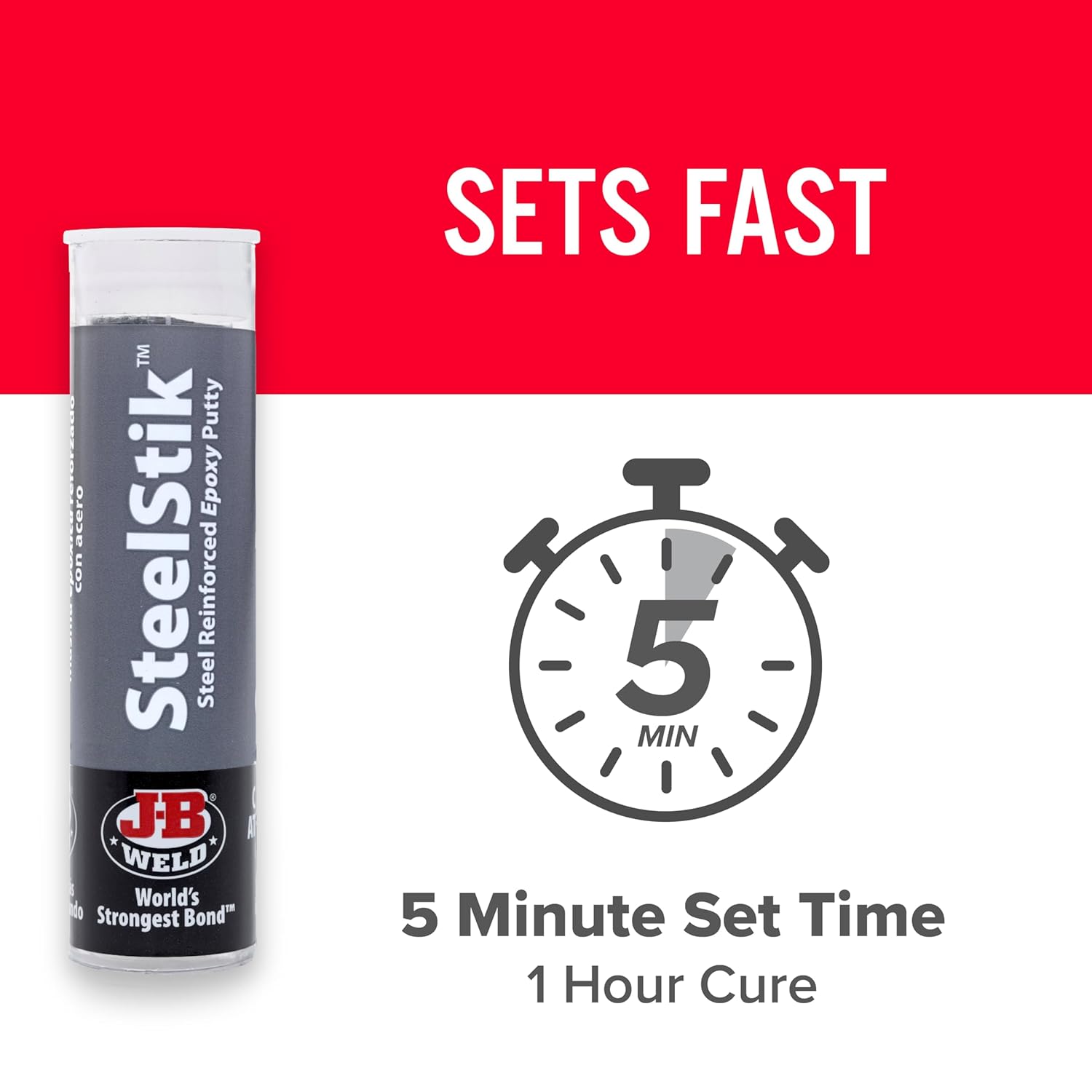
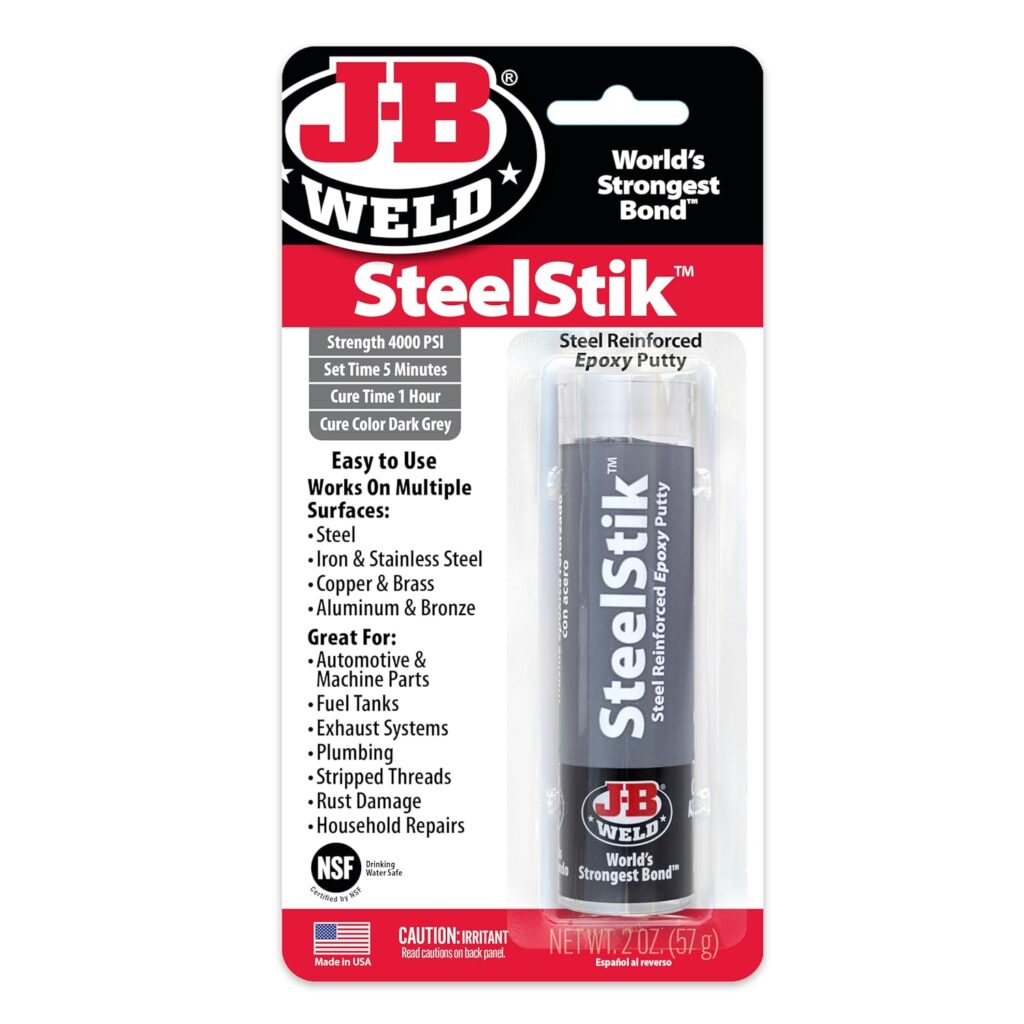
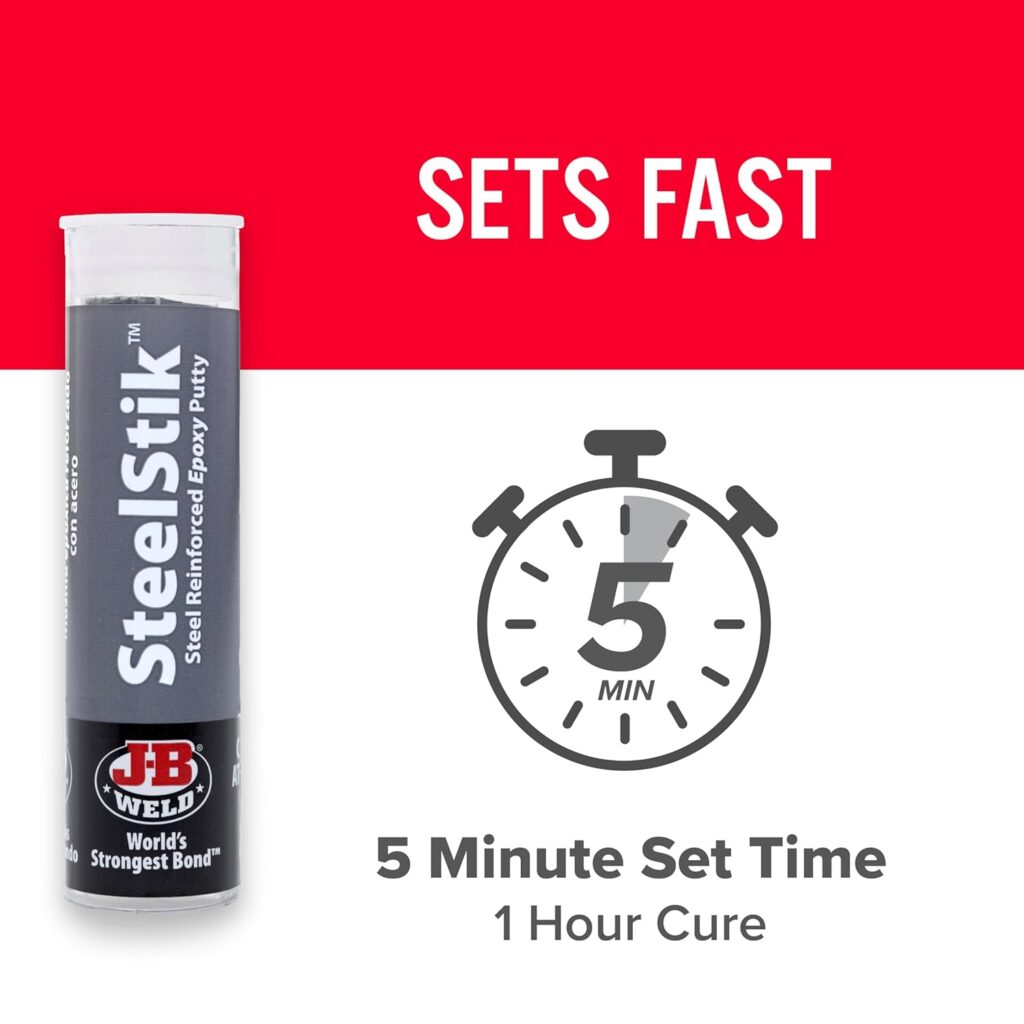
You get a hand-mixable, two-part epoxy putty stick that’s reinforced with steel particles and designed to repair or rebuild metal items quickly. It sets in about 5 minutes after kneading, cures in roughly 1 hour, and finishes as a dark gray material that you can shape, sand, drill, and tap after it cures.
What this product is
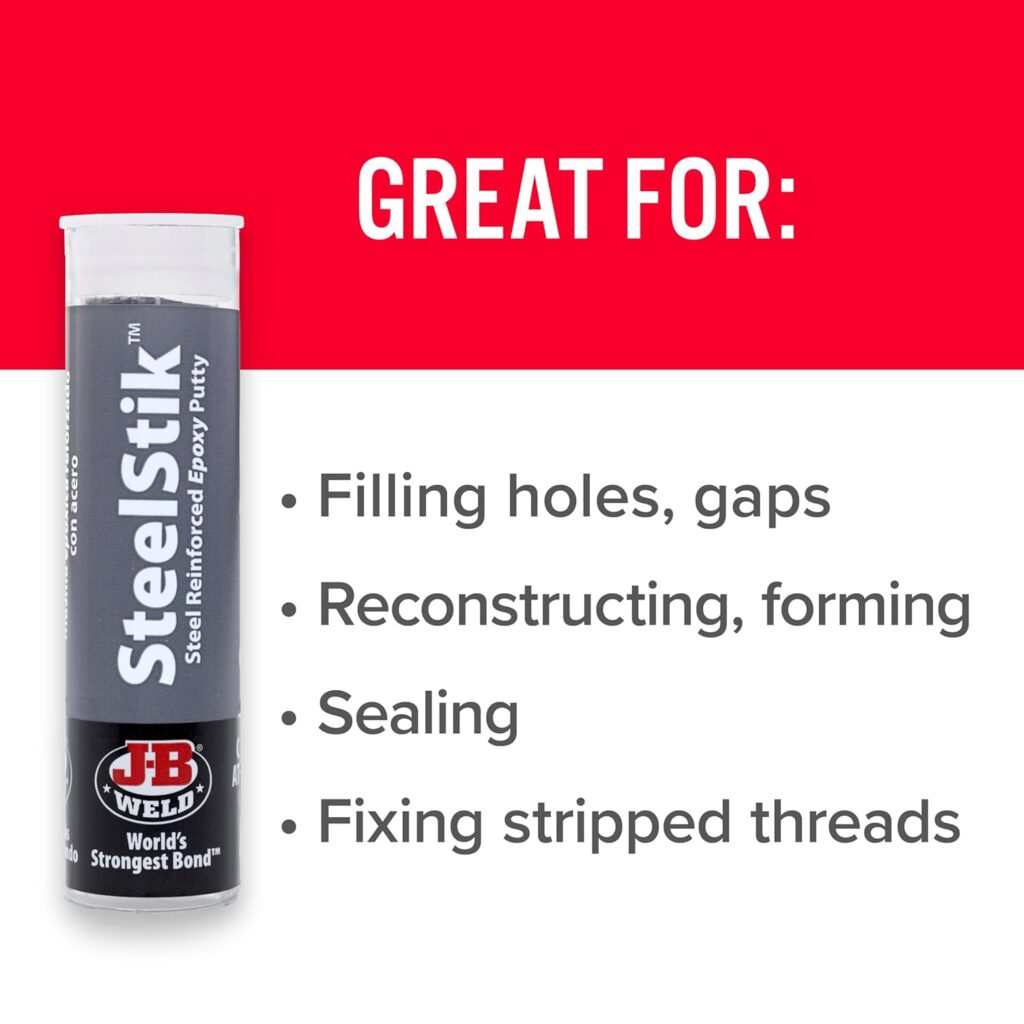
J-B Weld 8267 SteelStik Steel Reinforced Epoxy Putty Stick – 2 oz. is an epoxy putty stick that blends a resin and a hardener when you knead the two parts together by hand. The formula contains steel reinforcement so it won’t rust and it’s certified by NSF as safe for contact with potable water when cured. You’ll use it when welding isn’t practical, when you need a quick repair, or when you want a corrosion-resistant patch.
Key specifications
You’ll find the core technical details summarized in the table below so you can compare performance easily.
| Feature | Specification |
|---|---|
| Product name | J-B Weld 8267 SteelStik Steel Reinforced Epoxy Putty Stick – 2 oz. |
| Size | 2 oz stick |
| Mixing | Hand mixable, two-part putty |
| Set time | 5 minutes after kneading |
| Cure time | 1 hour (functional cure) |
| Cured color | Dark gray |
| Lap shear strength | 900 psi |
| Continuous temperature resistance | Up to 350°F (176°C) |
| Intermittent temperature resistance | Up to 450°F (232°C) |
| Chemical resistance | Resists petroleum, hydraulic fluids, and other chemicals |
| NSF certification | Safe for contact with potable water (cured) |
| Post-cure workability | Moldable, shapeable, sandable, drillable, tappable |
| Typical applications | Iron, stainless steel, copper, brass, aluminum, bronze, fiberglass, plastic, PVC |

First impressions
When you open the package, you’ll notice the stick is solid, dense, and easy to split into workable chunks. It kneads smoothly and becomes a uniform dark gray fairly quickly if you work it thoroughly.
Packaging and size
The 2 oz size is compact and easy to store in a toolbox or cabinet. You’ll find a single stick sealed to prevent curing before you use it; the packaging is straightforward and keeps the product ready for occasional use or a single immediate repair.
Handling and feel
You’ll notice the steel reinforcement gives the material a gritty, metallic feel once mixed. It isn’t sticky like uncured resin if you knead it properly; rather, it forms a putty you can press and mold without tools, which is handy when you’re on a ladder or working with awkward parts.

How to use
You’ll get the best results if you follow a simple workflow: prepare the surface, hand-knead the stick until color is uniform, apply and shape quickly, then allow the putty to set and fully cure.
Surface preparation
You should clean the repair area thoroughly before applying the putty. Remove any loose paint, rust, oil, dirt, or grease. Roughen smooth surfaces with sandpaper or a wire brush to increase mechanical bonding, and then wipe with a solvent like acetone if safe for the substrate. Proper prep directly affects adhesion and longevity.
Mixing and kneading
Break off the amount you need, then knead the two colors of the stick together until you have a consistent color and texture. You’ll usually have about 5 minutes of working time before the putty begins to set, so mix only what you’ll use immediately. Knead with your gloved hands for the best blend.
Application tips
Press the mixed putty into cracks, gaps, or over holes and press firmly to force it into contact with the substrate. Use a plastic or wooden tool to shape and smooth the surface if you want cleaner lines. Keep a wet cloth nearby to wipe excess before it sets, and consider scuffing the surface again if you plan to bond a second layer for added thickness.
Setting and curing
After kneading, the putty begins to set in about 5 minutes, meaning you’ll need to work quickly. It reaches a serviceable cure in approximately 1 hour, but full mechanical strength will develop over the following hours—allow more time if you’re relying on maximum strength or planning heavy machining. Temperature affects cure time; warmer conditions speed it up.
Performance
You’ll want to know how it performs under load, heat, and exposure to fluids. The SteelStik’s steel reinforcement and epoxy matrix give a balance of strength, temperature tolerance, and chemical resistance suitable for many repair tasks.
Strength and durability
SteelStik offers a lap shear strength around 900 psi, so it forms a solid mechanical bond on prepared surfaces. It’s durable for non-welded repairs and rebuilding small metal sections or filling holes, but it’s not a direct substitute for a structural weld in load-bearing, safety-critical applications.
Heat resistance
You can rely on SteelStik for continuous use up to about 350°F (176°C) and intermittent spikes up to about 450°F (232°C). That makes it suitable for many engine-bay and exhaust-related repairs, though constant high temperatures over time will eventually degrade polymer-based products, so check the thermal environment for long-term repairs.
Chemical resistance
Once fully cured, SteelStik resists petroleum, hydraulic fluids, and many common chemicals, which helps if you’re repairing fuel tanks, oil pans, or areas exposed to shop fluids. You should still check specific chemical compatibility for unusual or aggressive solvents, but for typical automotive and hydraulic exposures, it’s robust.
Mechanical processing (sanding, drilling, tapping)
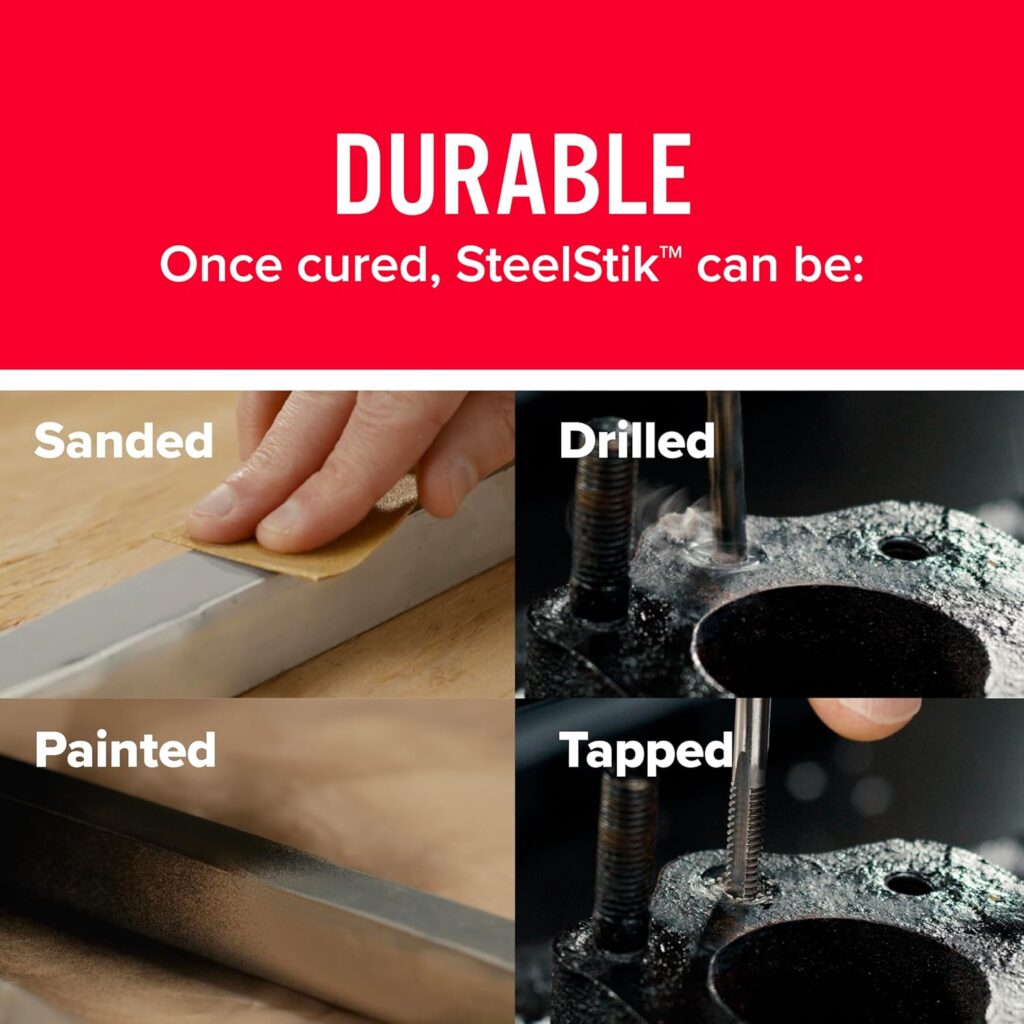
After the putty cures to its dark gray finish, you can sand it smooth, drill holes through it, or tap threads if you rebuild stripped holes. That makes it versatile for cosmetic as well as functional repairs where you’ll need threads or a precise fit afterward.
Suitable surfaces and typical repairs
You’ll find SteelStik works well on many materials, and you’ll likely have it on hand for a number of common projects.
Metals: iron, stainless steel, copper, brass, aluminum, bronze
SteelStik bonds well to ferrous and non-ferrous metals when surfaces are properly prepped. Use it to patch holes, rebuild corroded sections, and fashion overlays or reinforcements. For aluminum and other softer metals, roughening the surface first improves adhesion.
Fiberglass, plastic, and PVC
You can use SteelStik on fiberglass and many plastics, including some PVC applications. Note that adhesion varies by plastic type, so test on inconspicuous areas or roughen the surface to promote better bonding. Because SteelStik contains steel reinforcement, it’s heavier and mechanically different from plastic-specific epoxies, but it still serves well for bonded patches on composite and rigid plastic parts.
Plumbing and potable water
Because SteelStik is NSF certified for potable water contact, you can use it for potable water plumbing repairs once it’s fully cured. That makes it handy for patching leaks or rebuilding fittings, but you should always ensure the repair is mechanically sound and appropriate for the system’s pressure.
Practical projects and examples
You’ll appreciate how many real-world fixes SteelStik can handle. Here are concrete examples and step-by-step approaches you can use.
Patch a small hole in a metal tank
- Drain and dry the tank completely and remove any loose corrosion around the hole.
- Sand the area around the hole to bare metal.
- Knead the putty to a uniform color, then press it firmly into the hole from the outside, creating a slight fillet over the edge for strength.
- Smooth the surface and allow at least 1 hour to cure before refilling the tank. Because of the NSF certification, you can use it for potable water tanks after full cure.
Fix a cracked exhaust bracket or heat-tolerant component
- Clean the area to remove grease and loose rust.
- Roughen mating surfaces and mix a small amount of putty.
- Apply and shape quickly, bearing in mind the cure window.
- Allow proper cure time; SteelStik withstands heat up to 350°F continuously and higher intermittently, so it’s suitable for many engine-bay brackets and supports. For direct high-temperature sections like hot exhaust pipe walls, consider mechanical reinforcement as well.
Repair a leaking radiator or heater hose fitting
- Cool the system and drain the coolant.
- Clean the repair area thoroughly and sand to bare metal if possible.
- Mix and apply SteelStik to seal the leak, pressing it into the crack.
- After the putty cures, refill the system and monitor for leaks. The chemical resistance helps where coolant and oils are present.
Rebuild stripped threads and flanges
- Remove any damaged material and clean the area.
- Form the putty into a plug, press into the hole, and shape to mimic the original thread or insert a temporary rod to cast a new profile.
- After curing, drill and tap the putty to your desired thread size. This is ideal for low to moderate strength thread repairs, not for primary structural fasteners.
Bond dissimilar materials (metal to fiberglass or metal to PVC)
- Clean and roughen both surfaces for mechanical grip.
- Use SteelStik to form a fillet that overlaps both materials by at least half an inch for good load distribution.
- Allow to cure fully before stressing the joint.
Tips and tricks
You’ll improve results and make your repairs last longer if you follow some practical tips from experienced users.
Getting the best bond
- Always clean and roughen surfaces; adhesion depends strongly on surface prep.
- Use a solvent wipe (acetone or isopropyl alcohol) to remove oils and contaminants.
- For large gaps, build the repair in layers, allowing each to firm up slightly before adding the next to reduce sagging and voids.
Shaping and finishing
- Keep a bucket of cold water and a damp rag handy to smooth the surface before it sets.
- Use plastic or wooden tools to shape the putty so you don’t lose too much material to sticking on metal tools.
- If you need a clean cosmetically pleasing finish, sand progressively with finer grit after full cure and then paint.
Painting and cosmetic fixes
- After sanding and cleaning the cured surface, you can prime and paint SteelStik with standard paints designed for metal or plastic surfaces. Use a primer recommended for metal to enhance paint adhesion.
Limitations and when not to use
You should avoid using SteelStik as a substitute for welding or proper mechanical joints in structural or safety-critical applications. Although strong for an epoxy putty, it does not carry the same strength as a welded or bolted repair in high-load or crash-critical scenarios.
- Don’t rely on SteelStik for primary structural repairs on load-bearing members in vehicles, buildings, or machinery where safety depends on metal continuity.
- Avoid using it on plastics that are notoriously difficult to bond (like polyethylene or polypropylene) without prior surface treatment or an adhesion promoter.
- Don’t expect permanent performance in continuously extreme temperatures beyond the stated limits; polymers eventually soften or degrade under prolonged heat.
Safety and storage
You’ll want to handle and store SteelStik responsibly to avoid skin contact, contamination, or premature cure.
- Wear nitrile gloves when kneading and applying to avoid skin contact and simplify cleanup.
- Work in a well-ventilated area, and avoid inhaling dust while sanding a cured patch.
- Keep the stick sealed and stored in a cool, dry place to extend shelf life. Once opened, use within a reasonable period and reseal packaging to prevent contamination.
- Dispose of unused cured material per local regulations; uncured resin should be treated as epoxy waste.
Comparison and alternatives
If you’re deciding between options, here are useful comparisons to frame SteelStik versus other approaches.
Compared to traditional welding or brazing
You’ll find welding is stronger and more permanent for load-bearing repairs, but SteelStik wins on speed, convenience, and application without specialized equipment. Use SteelStik for quick field repairs or where heat from welding would damage surrounding components.
Compared to other epoxy putties
SteelStik’s steel reinforcement sets it apart for metal repairs where a metal-like feel and enhanced temperature resistance are important. Compared to general-purpose epoxy putties, it tends to be more suitable for contact with metal and heat-exposed environments, but you should check each product’s external specs to match strength and chemical resistance.
Frequently asked questions
You’ll likely have a few common questions before you use this product. Here are clear answers based on the product’s specifications.
-
Is it safe for drinking water applications?
Yes. J-B Weld SteelStik is NSF certified and safe for contact with potable water once fully cured. -
How long do you have to work with the putty after kneading?
You’ll have about 5 minutes of working time before the material begins to set, so mix only what you need and work efficiently. -
Can you use it on aluminum and brass?
Yes. It adheres to non-ferrous metals (aluminum, copper, brass, bronze) when the surface is properly prepared. -
Can it be used on hot engine parts?
You can use it on parts exposed to up to 350°F continuously and occasionally up to 450°F, but for continuous extreme heat consider more heat-tolerant methods. -
Can you sand or paint it?
Yes. After full cure, you can sand, drill, tap, and paint the cured epoxy putty. -
Is it a permanent replacement for welding?
No. While durable, it’s not a replacement for proper welding in critical structural repairs.
Troubleshooting common issues
If your repair isn’t performing as expected, these checks will help you identify the cause.
-
Poor adhesion or flaking:
Most likely the surface wasn’t cleaned or roughened well. Re-clean and abrade the area before applying a fresh patch. -
Putty crumbles after curing:
You may not have mixed it thoroughly, or you allowed too long of a work time and didn’t get a full chemical reaction. Knead until uniform color and apply within the working window. -
Weak joint under load:
Consider mechanical reinforcement like backing plates or bolts, and ensure the repair area was adequately prepped. For high-load applications, welding or bolting is preferable.
Final recommendation
If you want a fast, hand-mixable epoxy putty that’s reinforced with steel for metalwork and a variety of other repairs, J-B Weld 8267 SteelStik Steel Reinforced Epoxy Putty Stick – 2 oz. is a strong candidate for your toolkit. You’ll appreciate the quick set and short cure time, NSF potable water safety, temperature tolerance, and the ability to sand, drill, and tap after cure. Use it for patching, rebuilding, and bonding in many non-critical applications, and always prepare surfaces and follow safety practices to get the most durable result.
Disclosure: As an Amazon Associate, I earn from qualifying purchases.