

Need a fast-setting epoxy that can handle metal repairs and a dozen other household fixes without slowing you down?

Product Overview
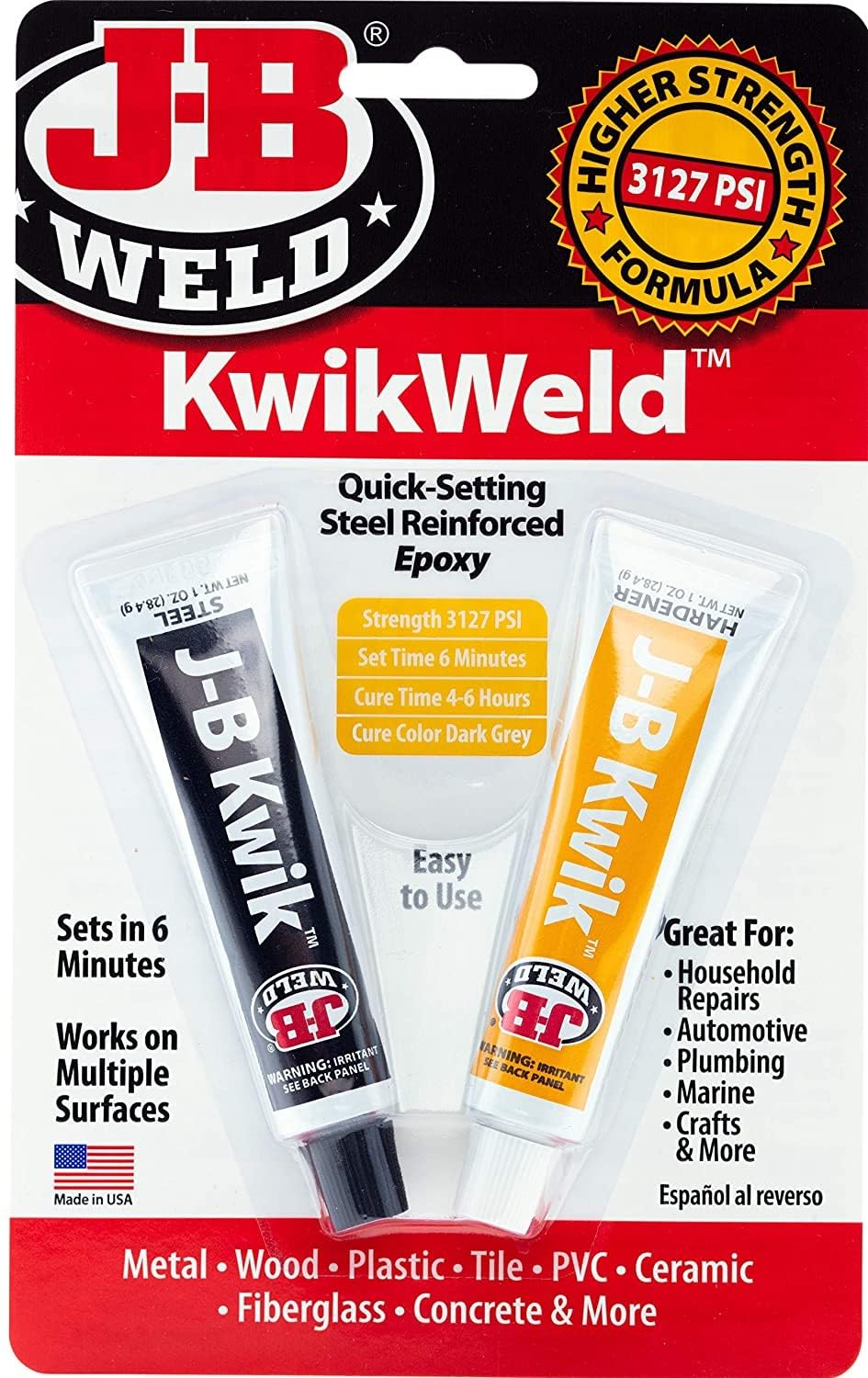
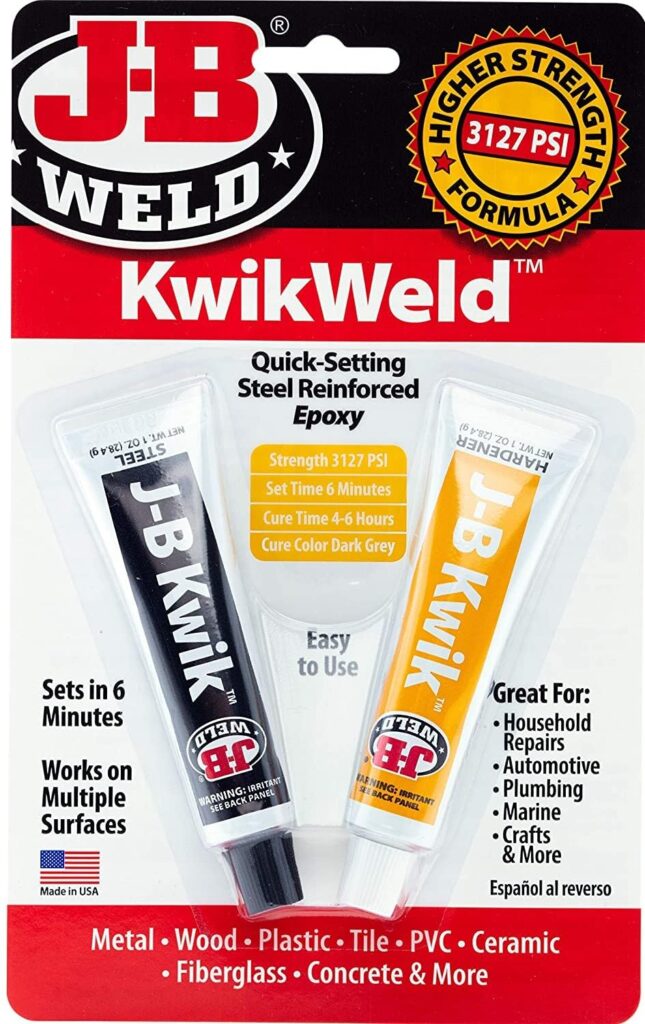
You’ll find that J-B Weld 8276 KwikWeld Quick Setting Steel Reinforced Epoxy – Dark Grey 2 oz is designed to give you fast, reliable repairs across many materials. It’s a two-part cold weld epoxy that mixes at a 1:1 ratio and sets quickly, so you can move on to the next step of your project without a long wait.
You’re working with a steel-reinforced formula that aims to combine the convenience of a quick set with the strength more commonly associated with slower-curing epoxies. The dark grey color makes finished repairs look less obtrusive on metal surfaces and blends in reasonably well on many other substrates.
What’s in the package and how it works
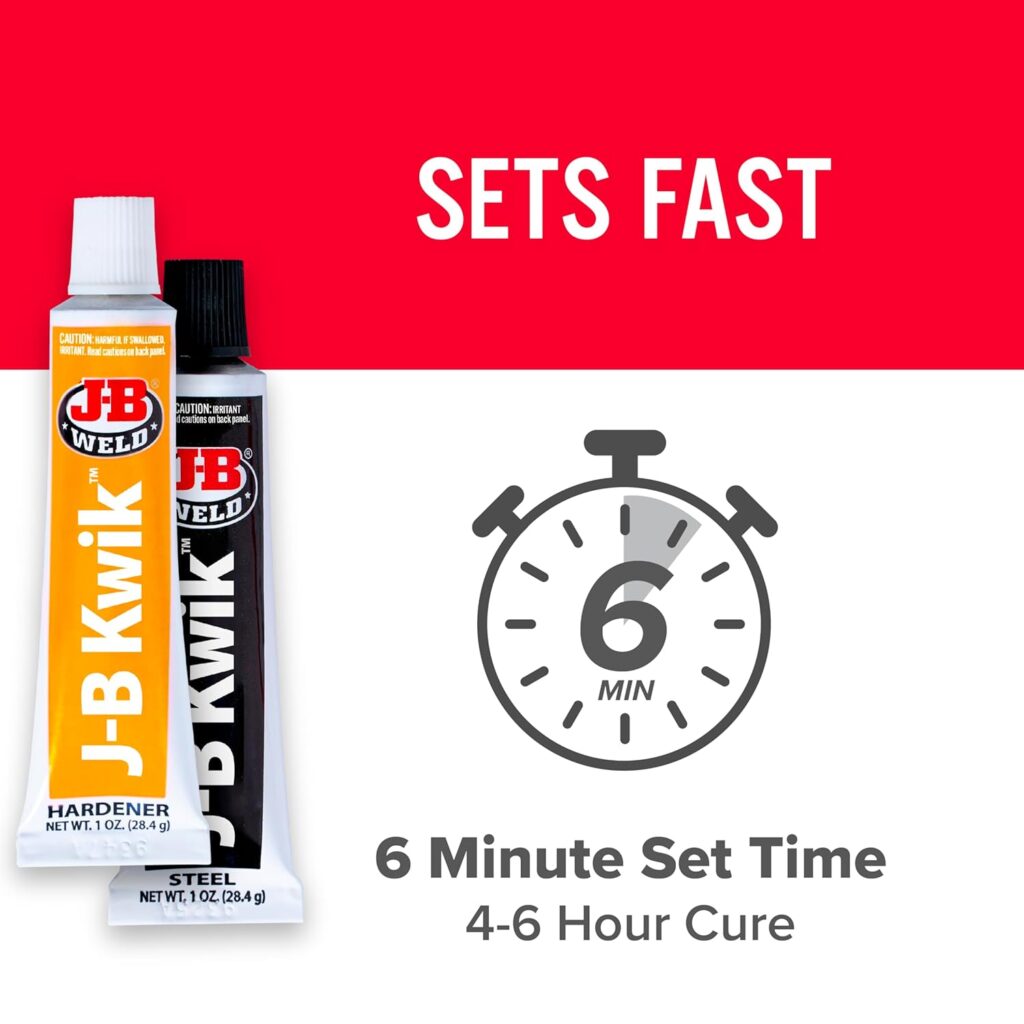
You’ll receive two tubes—one resin and one hardener—meant to be squeezed out in equal amounts and mixed thoroughly. After mixing, the epoxy begins to set in approximately 6 minutes and reaches a cured state in about 4–6 hours, depending on environmental conditions.
The mechanics are simple: the hardener reacts with the resin to form a rigid polymer matrix reinforced with steel particles. This combination gives you both adhesion and structural strength for many repair tasks.

Key Specifications
You should know the essential specs before you use the product so you can judge whether it suits your job. These numbers and limits are a practical baseline for everyday repairs.
You’ll also want to compare these specs to the demands of the item you’re repairing—temperature exposure, mechanical stress, and chemical contact are all important to consider.
| Feature | Specification | What it means for you |
|---|---|---|
| Product Name | J-B Weld 8276 KwikWeld Quick Setting Steel Reinforced Epoxy – Dark Grey 2 oz | The full commercial name and size you’ll find on the shelf. |
| Mixing Ratio | 1:1 (by tube) | Mix equal parts of resin and hardener for proper cure. |
| Set Time | ~6 minutes | You’ll have limited working time; plan clamps and positioning ahead. |
| Cure Time | 4–6 hours | The repair reaches usable strength within hours, not days. |
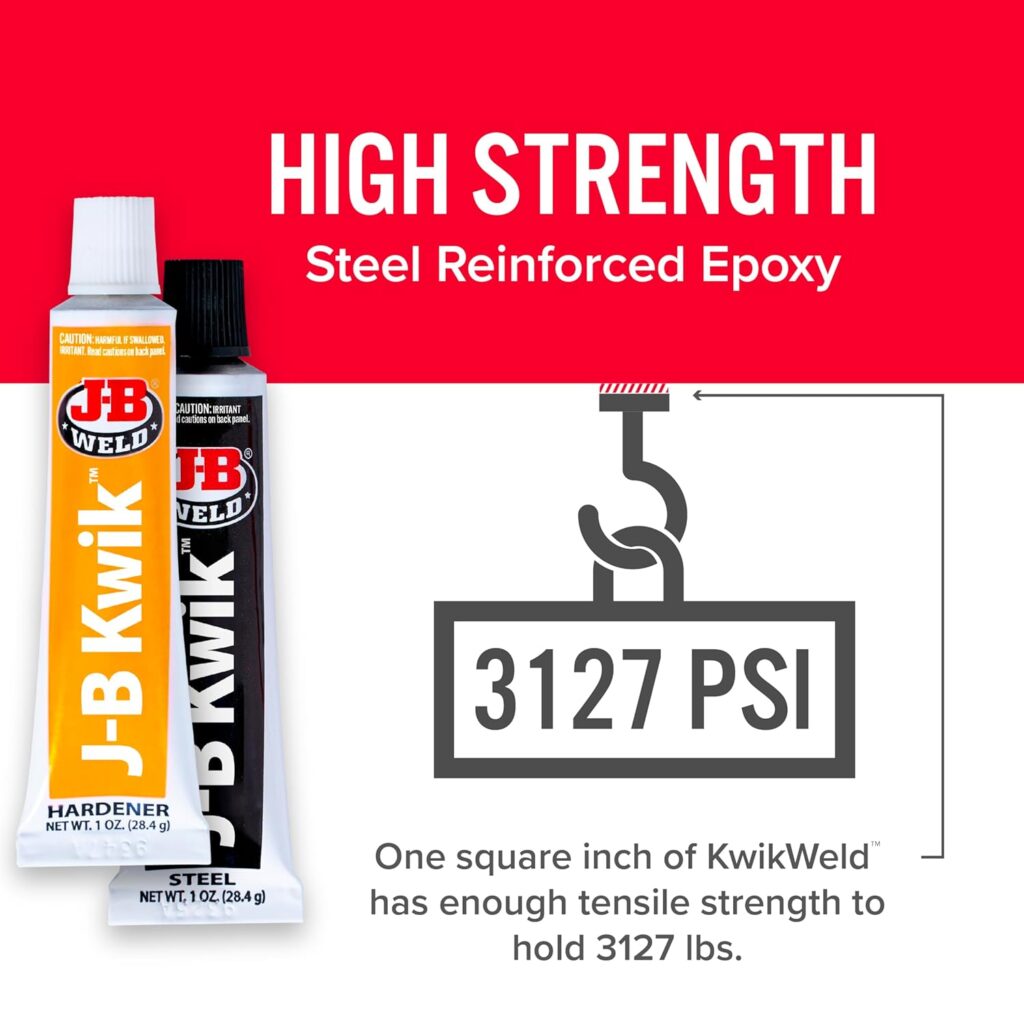
| Tensile Strength | 3127 psi | Strong enough for many structural and load-bearing household and automotive repairs. |
| Temperature Resistance | Up to 230°F (110°C) | Suitable for many automotive and household applications but not for very high-temperature environments. |
| Color (Set/Cure) | Dark Grey | Blends well on metal and is easy to see while working. |
| Water & Chemical Resistance | Waterproof once fully cured; resistant to petroleum, chemical, and acid exposure | Good for marine and automotive use where moisture and fluids are present. |
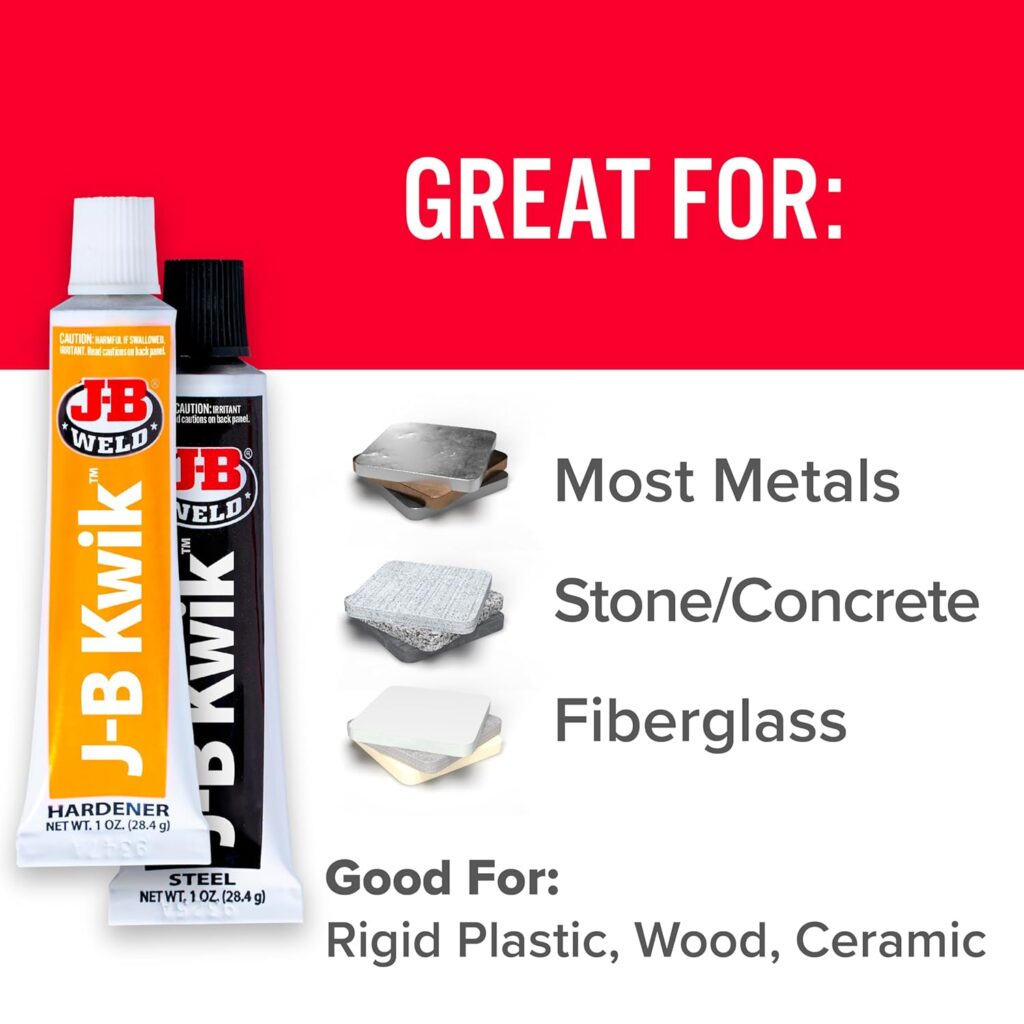
| Surface Compatibility | Metal, plastic & PVC, wood, concrete, ceramic & tile, fiberglass, and more | Versatile across many common substrates, with some surface prep considerations. |
| Post-Cure Workability | Can be tapped, filled, sanded, molded, and drilled | You can finish the repair for aesthetics or to fit mechanical tolerances. |

How to Use KwikWeld
You’ll get the best results if you follow a straightforward, reproducible process. Quick set times mean preparation will be the key to a neat repair.
Keep the area clean, gather the tools you’ll need (mixing stick, disposable surface, sandpaper, clamps), and plan how you’ll position the parts before you start. Once the tubes are squeezed and mixed, you’ll have only a few minutes to work.
Mixing and application steps
You should squeeze out equal lengths of each tube onto a clean, disposable surface and mix thoroughly until the color is uniform. You’ll want to mix for at least 20–30 seconds to ensure a consistent cure.
Once mixed, apply the epoxy immediately. For gaps and bonding, press the parts together and clamp if possible. You’ll have about 6 minutes before the epoxy begins to set, so work quickly and precisely.
Curing and finishing
You’ll allow the epoxy to cure about 4–6 hours under normal room conditions for initial handling strength. For maximum strength and full cure, you may want to let it sit longer—overnight is a practical standard.
After curing, you can tap, file, sand, drill, or paint the repair. The dark grey color can be sanded smooth and finished to match surrounding materials if aesthetics matter.
Surface Compatibility and Preparation
If you take the time to prepare surfaces properly, you’ll significantly improve bond strength and durability. Surface prep is often the difference between a repair that lasts and one that fails prematurely.
Different materials need slightly different prep steps, but the universal rules are: remove oil, rust, paint, and contamination; roughen very smooth surfaces; and ensure parts fit together well enough for the epoxy to bridge gaps.
Metal
You’ll want to remove rust, paint, and grease using a wire brush, sandpaper, or a chemical cleaner where appropriate. Roughen the bonding area to increase mechanical adhesion.
For heavy loads or critical repairs on structural metal, consider whether an adhesive alone is appropriate, and supplement with mechanical fasteners if safety is a concern.
Plastics, PVC, and fiberglass
You’ll clean plastic surfaces thoroughly, and where possible, roughen them with sandpaper. Some plastics—like polyethylene or polypropylene—are difficult to bond without special primers; test a small area if you’re unsure.
Fiberglass and PVC respond well to sanding and cleaning. Ensure any resin contamination is removed to promote a strong bond.
Wood, concrete, ceramic, and tile
You’ll make sure these porous surfaces are clean and dry. For concrete and tile, removing loose particles and cleaning with a stiff brush or solvent will help. On wood, ensure surfaces are sanded and dry to prevent moisture from interfering with the cure.
Performance and Durability
You’ll appreciate that KwikWeld balances speed with credible mechanical performance. The 3127 psi tensile strength puts it in a range where you can trust it for many functional repairs.
You should remember, though, that thermal cycles, continuous high temperatures (>230°F/110°C), or extreme flexing can weaken any epoxy over time. Plan repairs with these environmental factors in mind.
Mechanical strength and longevity
You’ll find that once cured, the epoxy forms a rigid, steel-reinforced bond capable of handling mechanical loads common in automotive brackets, household fixtures, and general metal repairs. The reinforcement improves compressive and shear performance as well.
For long-term durability, allow full cure, avoid exposing repairs to temperatures above the specified limit, and recognize that epoxy may become brittle with age or under repeated impact.
Chemical and water resistance
You’ll rely on KwikWeld for water-tight repairs because the cured material is waterproof. It also resists petroleum products, many chemicals, and acids in typical exposure scenarios, making it suited for underhood or marine repairs.
If your repair will face harsher chemical exposure than typical automotive fluids, or if you’re working in an aggressive industrial environment, consider consulting technical datasheets or testing a sample.
Strengths and Limitations
You’ll get a practical sense of where this product really shines—and where you should be cautious—by weighing its strengths and limitations.
The strengths make it a go-to for rapid repairs; the limitations remind you to think about long-term stresses or specially challenging materials.
Strengths
You’ll benefit from fast set and cure times, steel reinforcement for improved strength, broad substrate compatibility, and good resistance to water and common chemicals. The ability to sand, drill, and shape the cured material gives you finishing flexibility.
The packaging is convenient for one-off repairs because the small 2 oz size reduces waste and is easy to store.
Limitations
You’ll face a very short working time—about 6 minutes—so planning is essential. You should also be aware of the maximum temperature limit of 230°F (110°C). For applications that exceed that repeatedly, the epoxy may soften or lose strength.
Some plastics like polyethylene and polypropylene are notoriously difficult to bond, and you may need special primers or alternative adhesives. For safety-critical structural repairs, rely on mechanical fasteners in combination with epoxy rather than epoxy alone.
Practical Applications and Use Cases
You’ll find this epoxy useful in a wide range of real-world repairs. Below are common applications with notes on how to approach each situation practically.
Automotive repairs
You’ll use KwikWeld for fixing brackets, patching housings, repairing plastic trim, or sealing oil pans and other non-pressurized components. The petroleum resistance and temperature tolerance suit many underhood tasks.
When repairing parts subject to high vibration or critical to safety—like suspension components—use epoxy in conjunction with mechanical fasteners and inspect frequently.
Marine and water-exposed repairs
You’ll appreciate that the cured epoxy is waterproof, making it useful for small hull repairs, fitting fixes, or bonding hardware. The resistance to petroleum and chemicals also helps in engine compartments and deck fittings.
You should ensure good surface prep and, for below-waterline repairs, try to minimize water contact during curing—use clamp-on straps or temporary plugs when feasible.
Household and DIY
You’ll find many uses around the home: mending broken ceramic, bonding metal fixtures, sealing cracks in concrete, or repairing wooden furniture. The fast set time is handy for quick fixes that you want to complete the same day.
For visible repairs, remember you can sand and paint the cured epoxy to better match the surrounding area.
Crafts and hobbies
You’ll use KwikWeld when you need a strong, quick bond for metal or mixed-material projects. The ability to mold, sand, and shape after cure makes it useful for custom fabrication and model-making where strength is important.
Because the epoxy cures quickly, it’s especially useful in timed projects and smaller batch work where turnaround time matters.
Tips for Best Results
You’ll maximize bond strength and ease of use if you follow a few simple tips. These help you overcome the short working time and ensure durable repairs.
Good planning and preparation are often the most important steps you’ll take before grabbing the tubes.
Plan before mixing
You’ll prepare clamps, mixing sticks, cleaning supplies, and the pieces you want to bond before you squeeze the tubes. Because the epoxy starts to set in about 6 minutes, having everything ready prevents rushed work and weak bonds.
Pretend the mixing stage is the start of a timed operation and set up your workspace to support efficient application.
Surface prep is critical
You’ll clean surfaces of oil, grease, paint, and loose material. Use a degreaser or solvent compatible with the substrate, then roughen smooth surfaces with sandpaper to create mechanical bite.
On metal, removing rust and using a wire brush improves contact area and mechanical adhesion.
Use the right amount and mix thoroughly
You’ll apply enough epoxy to wet both surfaces and fill gaps, but avoid excessive squeeze-out. Mix until the color is uniform—poor mixing is one of the most common causes of incomplete cure and weak bonds.
If you need more working time for a tricky geometry, warm the parts slightly (not the epoxy) or work in a warmer environment; conversely, colder conditions increase cure time.
Clamping and alignment
You’ll clamp or support parts to maintain alignment during the set. The initial set is quick, but the bond gains strength over several hours—clamping prevents movement that would weaken the cured joint.
Use wax paper or a release agent on clamping surfaces where epoxy squeeze-out might bond parts together.
Finishing
You’ll be able to sand, drill, and paint after full cure. Start with coarse grit to shape and move to finer grits for a smooth finish. Use appropriate primers if painting, since epoxy can be non-porous and some paints need a primer to adhere properly.
Safety, Handling, and Storage
You’ll handle KwikWeld much like any two-part epoxy—respect the chemicals involved and take simple precautions to protect yourself and your workspace.
Following good safety practices ensures both a better repair and a safer process.
Personal protective equipment
You’ll wear nitrile gloves to avoid skin contact and use eye protection in case of splashes. If you’re working indoors, ensure ventilation or use a respirator if recommended by the product safety data sheet.
Avoid prolonged skin contact; if you get uncured epoxy on your skin, clean it immediately with a suitable solvent and soap.
Work area ventilation and waste disposal
You’ll work in a well-ventilated area and dispose of used mixing surfaces, sticks, and empty tubes according to local regulations. Hardened epoxy is inert, but uncured material should be treated as a chemical waste.
Keep the product out of reach of children and pets.
Storage
You’ll store unused tubes in a cool, dry place. Extremely high temperatures or freezing conditions may affect the product’s shelf life. If you’re uncertain about shelf life or storage conditions, check the manufacturer’s guidance or package labeling.
Frequently Asked Questions (FAQ)
You’ll likely have practical questions when evaluating this epoxy. Below are common concerns and clear answers to help you decide if KwikWeld is right for your project.
How fast does KwikWeld actually set?
You’ll see initial set around 6 minutes after mixing, and the epoxy reaches handling strength in approximately 4–6 hours. Full strength develops over longer periods, so for critical loads, allow additional cure time.
Can it withstand engine heat?
You’ll tolerate temperatures up to 230°F (110°C). That makes it suitable for many underhood tasks but not for components that see higher continuous temperatures, like exhaust systems or turbo housings.
Will it stick to all plastics?
You’ll have success with many common plastics, but low-surface-energy plastics like polyethylene (PE) and polypropylene (PP) are problematic without special primers. Always test or consult technical guidelines for unusual plastics.
Can you paint it?
You’ll be able to sand and paint the cured epoxy. Use a primer if needed to enhance paint adhesion, and ensure the surface is clean and sanded for best results.
Is it safe for potable water repairs?
You’ll want to verify suitability before using epoxy on surfaces that contact drinking water. Some epoxies are certified for potable water use, but you should consult the manufacturer’s documentation to confirm compliance.
Troubleshooting Common Problems
You’ll occasionally see issues like partial cure, weak bond, or surface imperfections. Most problems trace back to surface prep, mixing, or environmental conditions.
Addressing these root causes will get you back on track quickly.
Epoxy won’t cure or is tacky
You’ll check that you mixed equal parts thoroughly: inadequate mixing is the most frequent cause of incomplete cure. Also confirm the work area temperature isn’t too cold and that the tubes are within their usable life.
If you still have cure issues after confirming these points, contact the manufacturer or consider trying a fresh product.
Bond failure
You’ll inspect surface preparation; contamination, oil, or paint often result in poor adhesion. Ensure the substrate is appropriately roughened and cleaned, and use mechanical fasteners or increased bonding area for high-stress repairs.
Cracking or brittleness
You’ll avoid excessive load on a cured repair and be mindful that epoxies can become brittle over time or under impact. For parts subject to vibration or impact, combine epoxy with mechanical reinforcement.
Comparing to Other Repair Options
You’ll want to weigh the advantages of KwikWeld against other adhesives or mechanical fixes. Speed, convenience, and steel reinforcement are core advantages, while very high-temperature scenarios or flexible joint needs may favor alternatives.
In many cases, the best approach combines adhesives with mechanical fixing for redundancy and safety.
When to choose KwikWeld
You’ll use KwikWeld when you need a fast, strong repair on metal or mixed materials, when waterproofing and chemical resistance matter, and when you plan to sand and finish the repair. It’s particularly handy for quick turnarounds and common home or automotive tasks.
When to consider alternatives
You’ll look for other solutions if your repair faces temperatures above 230°F, requires a flexible bond, or involves certain low-energy plastics without primers. For continuous high-load structural repairs, mechanical fasteners or metal welding may be more appropriate.
Final Verdict and Recommendations
You’ll find J-B Weld 8276 KwikWeld Quick Setting Steel Reinforced Epoxy – Dark Grey 2 oz a versatile, fast, and reliable repair product for many household, automotive, marine, and craft applications. Its quick set time and solid tensile strength make it ideal when you need a durable fix on the same day.
You’ll get the best outcomes by preparing surfaces thoroughly, planning your work to account for the short working time, and using clamps or supports during cure. Keep the temperature limit and material compatibility in mind, and pair the epoxy with mechanical fixes where safety is critical.
If you’re looking for a compact, easy-to-use epoxy that gives structural-like strength without long wait times, this product is a practical choice for many common repair jobs.
Disclosure: As an Amazon Associate, I earn from qualifying purchases.