

National Geographic Microscope for Kids Review: A STEM Marvel
Some kids lose interest in science toys after one afternoon. The National Geographic Microscope for Kids makes a better first impression because it gives you something to do right away, not just something to unbox. With up to 400x magnification, a hands-on specimen set, and a price of $39.99, it sits in the sweet spot between cheap novelty gear and pricier beginner lab tools.
If you’re trying to find a STEM gift that feels educational without becoming frustrating, this microscope is worth a serious look in 2026. The included lab guide and experiment tools suggest it’s designed for active use, not shelf appeal. Early on, the value proposition is clear: accessible price, in stock, and enough included materials to help a young scientist start exploring immediately.

National Geographic Microscope for Kids with Up to 400x Magnification
$39.99
In Stock
As an Amazon Associate, I earn from qualifying purchases
Product Overview
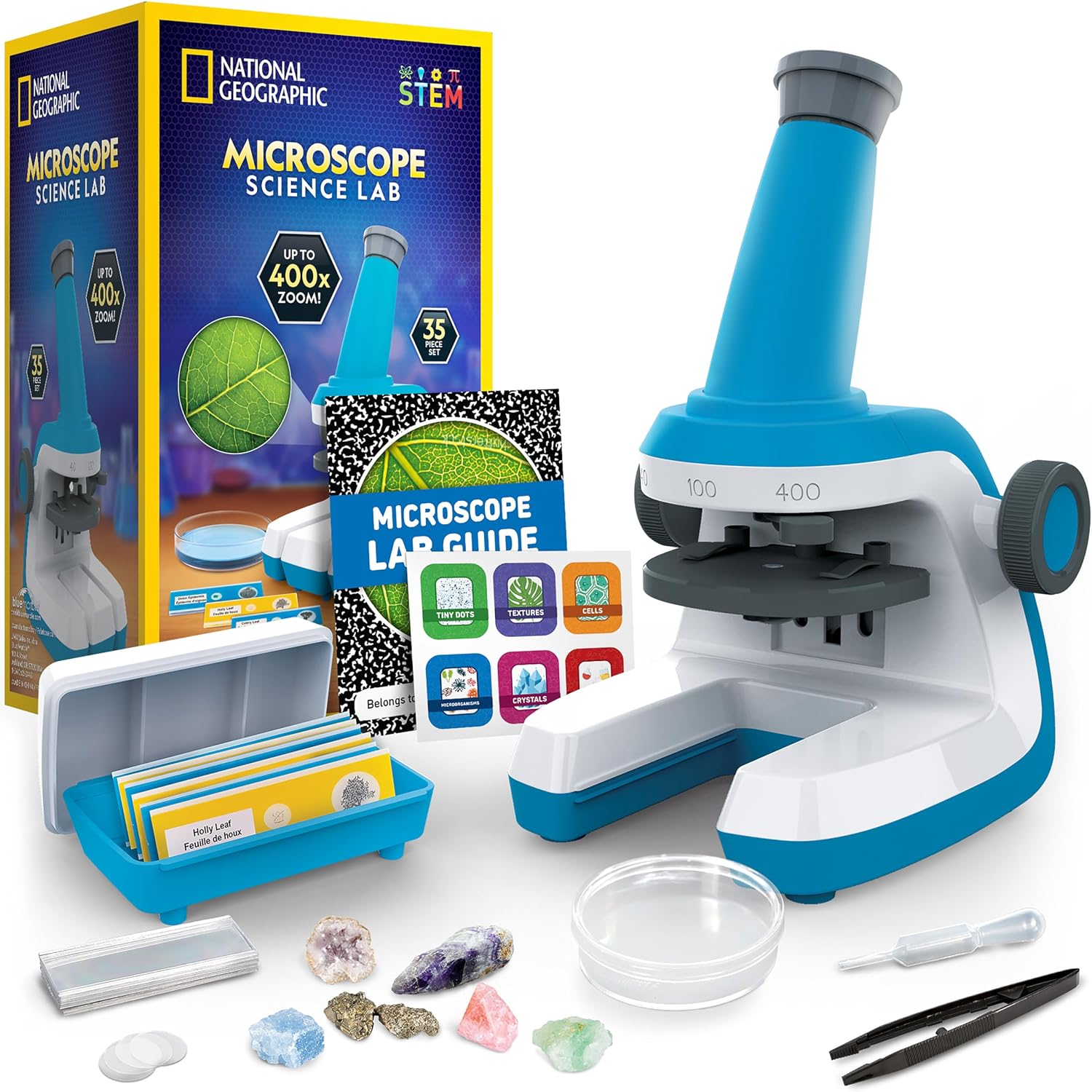
The National Geographic Microscope for Kids with Up to 400x Magnification is built as a starter science kit for children who want more than a pretend lab experience. You’re getting a real observation tool paired with experiment accessories and prepared samples, which matters because many entry-level kids microscopes force you to buy extras before the fun begins. Here, the kit approach is part of the appeal.
The current listed price is $39.99, and the item is marked In Stock, which keeps it within reach for families shopping for birthdays, holiday gifts, homeschool materials, or a weekend science project. That price places it in the lower-middle range of beginner microscopes: more substantial than a throwaway toy, but still far below dedicated student microscopes that can jump well past $60 or $100.
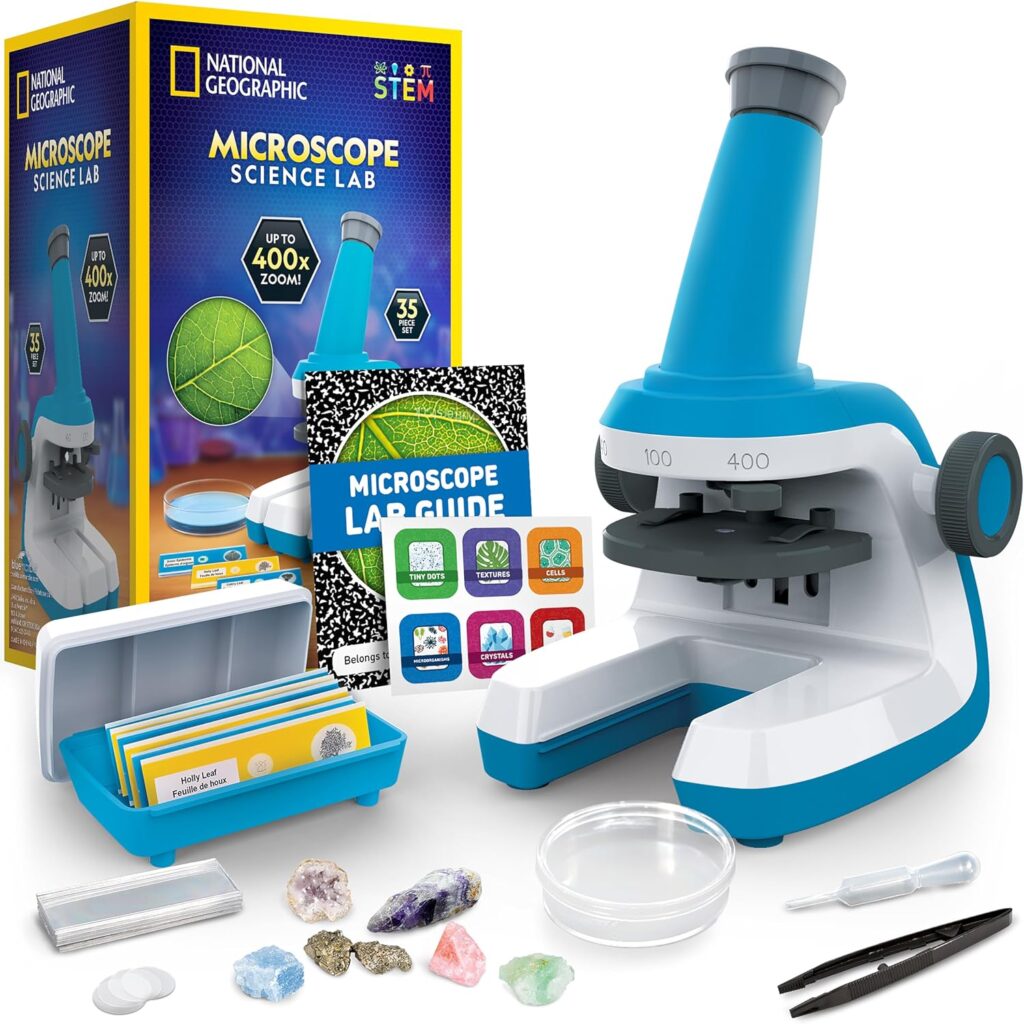
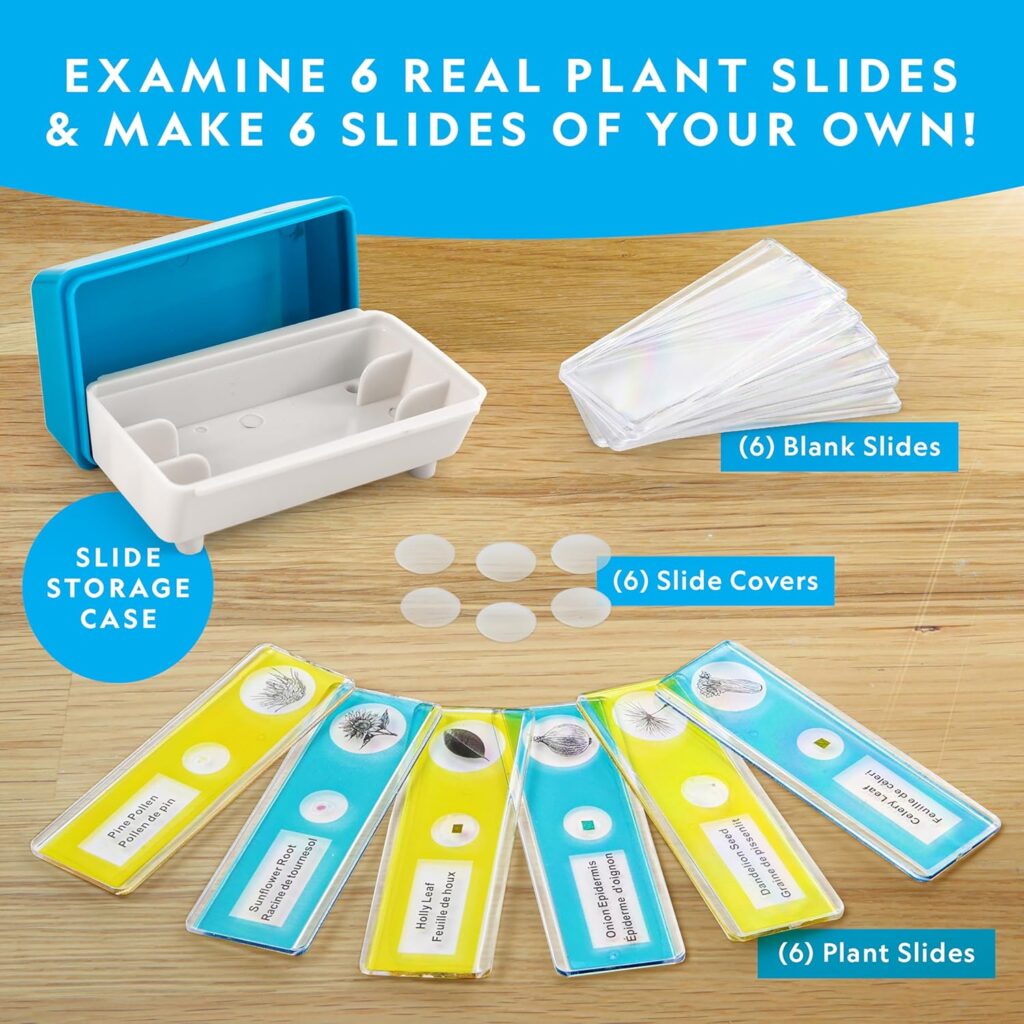
What stands out first is how the product balances learning and accessibility. The microscope offers three levels of magnification with a top end of 400x, and it ships with an entertaining lab guide instead of leaving you to figure out what to examine. You also get 6 prepared plant slides, 6 rocks and minerals, and 6 blank slides for home experiments, which gives you three distinct ways to start: view something ready-made, inspect natural materials, or create your own sample.
That breadth is why this kit has clear educational appeal. It doesn’t only show your child an image through an eyepiece; it introduces observation, specimen handling, and guided experimentation in one box. If your goal is to encourage curiosity while keeping the learning curve manageable, the package is thoughtfully arranged for exactly that purpose.
National Geographic Microscope for Kids Design and Build Quality
A starter microscope lives or dies by ease of use, and the design choices here show that the product was made with children in mind. The large focus knobs are a practical feature, not a cosmetic one. Younger kids often struggle with tiny controls, especially when they’re excited and moving too quickly, so oversized knobs make it easier to adjust the image without feeling like they’re handling a fragile lab instrument.
The soft-touch eyepiece is another smart inclusion. For a child using a microscope for the first time, comfort matters more than many adults expect. If the viewing position feels awkward or the eyepiece edge feels harsh, attention drifts fast. A softer contact point encourages longer sessions, which in turn improves patience and observation skills. That’s especially useful when you’re asking a child to compare one prepared sample with another or carefully inspect details in a mineral specimen.
The adjustable platform deserves special mention because it addresses one of the most common frustrations with beginner microscopes: keeping the specimen in the right spot. Slides that shift too easily can make children think the microscope is “not working” when the issue is just alignment. By making positioning easier, the platform reduces that learning barrier and gives kids a better chance of seeing a clear result on their own.
As for overall build, the product description points to a child-friendly construction rather than a precision academic instrument, and that’s the right approach for this category. In our experience with entry-level science gear, durability often comes down to whether the controls feel approachable enough that kids don’t force them. This model appears to understand that. It aims for repeat use by minimizing fiddly handling, which is exactly what a first microscope should do.

Key Features of the National Geographic Microscope for Kids
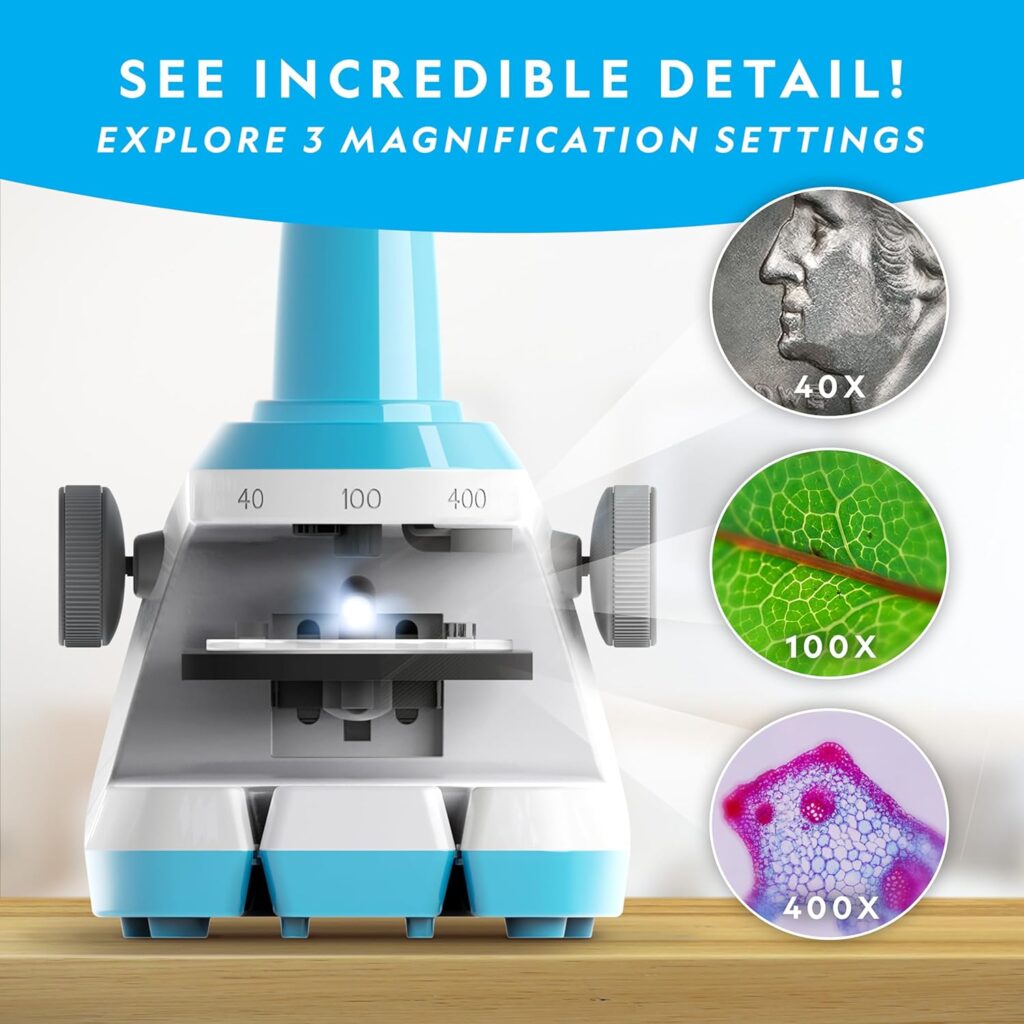
The strongest part of this kit is how its features work together rather than acting like isolated selling points. Start with magnification: you get three viewing levels, topping out at 400x. For a beginner, that range is enough to create a real sense of discovery without overwhelming them with overly technical setup. Lower magnification helps kids locate and center a specimen, while the higher setting makes details more dramatic once they understand what they’re looking at.
The microscope also includes lighting above and below, which is a meaningful upgrade over bare-bones options that rely on only one illumination point. Different specimen types benefit from different lighting angles. A prepared slide can respond differently from a small rock fragment, and giving kids both top and bottom light makes the viewing experience more flexible. Practically, that means fewer disappointing “I can’t see anything” moments.
Then there’s the specimen bundle. Instead of tossing in one or two token samples, the kit provides 6 prepared plant slides, 6 rocks and minerals, and 6 blank slides. That’s 18 included specimen-related components before you even start collecting your own material at home. The prepared slides are ideal for instant success, the rocks and minerals broaden the type of science your child can explore, and the blank slides open the door to personalized projects such as inspecting a leaf fragment, a drop of pond water, or a bit of onion skin.
The included assortment also extends the useful life of the toy. A lot of STEM gifts lose momentum because the first activity is also the last activity. Here, one child might spend the first week comparing the plant slides, then move on to household specimens, then return to the guide for more structured challenges. That layered use is part of what makes the feature set feel well judged for beginner science learning.
Hands-On Science Experiments
This is where the microscope starts to feel like a true STEM kit rather than a single-purpose viewing tool. Along with the microscope itself, you get a pipette, specimen dish, and tweezers, plus easy-to-follow instructions. Those extras matter because they teach process. A child isn’t only peering into an eyepiece; they’re learning how to transfer, isolate, and prepare simple samples in a way that mirrors real observation work at a beginner level.
If you want to help your child get the most out of it, the best approach is straightforward:
- Start with one of the prepared slides so your child sees a successful result quickly.
- Move to the included rocks or minerals and experiment with the lighting to understand how visibility changes.
- Use the blank slides for a simple home sample once your child understands focusing and positioning.
That sequence works because it builds confidence in stages. First comes instant gratification, then comparison, then experimentation. For younger users, that progression is often the difference between fascination and frustration.
The lab guide adds real educational structure. According to the product description, it includes viewing activities for several different specimen types, a super scientist game, and merit badge stickers. Those details may sound playful, but they serve a learning purpose. Activities give direction, games maintain engagement, and stickers create a sense of completion that encourages repeat sessions. For parents or teachers who don’t want to invent every lesson from scratch, that support is valuable.
In practical use, the kit can support several kinds of learning at once: observation skills, fine motor practice, note-taking habits, and basic scientific curiosity. If you’re homeschooling, it can serve as a simple lab-day centerpiece. If you’re a parent using it after school, the included guide lowers the pressure because you won’t need deep science expertise to get meaningful use from the box.
What Customers Are Saying
Customer sentiment is an important part of judging kids’ science products because ease of use tends to matter as much as the raw spec list. While no star rating or review-count figure was provided in the supplied product data, customer reviews indicate that beginner microscopes in this category are usually praised when children can start seeing results quickly and when adults don’t have to spend an hour troubleshooting the setup. Based on the design and included materials here, that pattern lines up with the product’s intended strengths.
Verified buyers often respond positively to products that combine ready-to-use samples with a guided activity book, and this kit checks both boxes. The prepared plant slides reduce the barrier to entry, while the experiment accessories add enough variety to keep the microscope from becoming a one-time novelty. Educational impact is another likely bright spot. Parents shopping in this category tend to value products that pull children away from passive screen time and into active observation, and this microscope is clearly built around that use case.
That said, the recurring concerns commonly seen with kids microscopes should still be on your radar. Some families find first-time assembly or initial setup less intuitive than expected, especially if a child wants to use the microscope immediately without adult help. Others can be more critical of accessory quality than of the microscope itself, particularly at this price tier. That doesn’t make the product a poor choice; it just means you should go in with the right expectations. At $39.99, this is best judged as a capable beginner kit, not a miniaturized professional lab instrument.
If you’re reading reviews before buying, look for comments that mention how old the child was, whether they used the prepared slides first, and how much adult guidance was needed. Those details will tell you more than a simple one-line opinion because they reveal whether the microscope matched the buyer’s expectations for age, independence, and learning value.
Who Is This Microscope For?
The clearest fit is for children who are old enough to follow simple instructions, handle accessories with some care, and stay engaged long enough to compare what they see. The product description doesn’t specify an exact age range, so the smarter way to judge fit is by skill level rather than a printed age bracket. If your child enjoys collecting rocks, asking how things work, or doing structured activities with a parent, this microscope makes sense. If they want instant entertainment with no patience for focusing or sample prep, it may take more guidance.
For parents, the appeal is straightforward: this is a STEM toy that asks kids to observe, experiment, and think. It offers more educational substance than many screen-free gifts because it supports open-ended curiosity. One afternoon can be spent viewing the prepared plant slides; the next can turn into a backyard specimen hunt. That flexibility helps justify the purchase because the kit isn’t locked into a single scripted activity.
Educators and homeschool families should also find it useful, especially in small-group settings. The included variety of specimens means you can build a short lesson around comparison and observation without gathering a lot of materials in advance. In a classroom, it’s better suited to demonstration, station work, or partner activities than to whole-class simultaneous use, since this is a single beginner microscope rather than a bulk lab setup. For homeschooling, though, it’s a strong match because one child can move through the guide at a comfortable pace and repeat activities as skills improve.
If you’re buying for a gift, it works best for the child who wants to do science rather than just hear about it. That distinction matters. This product rewards curiosity, patience, and hands-on exploration more than flashy unboxing appeal.
Value Assessment and Pricing
At $39.99, the value of this microscope comes down to how much learning is packed into the box before you need any add-ons. On that front, it performs well. You’re not paying only for magnification; you’re getting a starter ecosystem that includes prepared slides, natural specimens, blank slides, experiment tools, and a guided activity book. For many families, that reduces hidden costs because you won’t need to immediately buy separate accessories just to make the gift usable.
When you compare it by name with alternatives such as the AmScope Kids Microscope or the My First Lab Duo-Scope, the National Geographic model appears positioned as the more approachable all-in-one experience rather than the most ambitious academic option. Some alternatives may lean further into traditional student microscope design, while this one leans into accessibility and engagement. That distinction matters more than shoppers sometimes expect. A more advanced model isn’t automatically a better buy if a child finds it intimidating or difficult to use.
The cost-benefit ratio looks especially good if you view the purchase as a reusable learning tool instead of a one-week novelty. The box includes 6 prepared plant slides, 6 rocks and minerals, and 6 blank slides, plus experiment accessories and guided activities. That combination stretches playtime and supports repeat sessions, which is where educational products either earn their keep or fail. In our experience, longevity in a STEM toy usually comes from having both structure and freedom: enough guidance to get started, and enough open-ended potential to keep curiosity alive. This kit appears to offer both.
If your priority is serious long-term microscopy for older students, you may eventually outgrow the 400x ceiling and want a more advanced instrument. But if you’re buying a first microscope for elementary-age exploration, the asking price feels reasonable and well matched to what’s included. For the right user, the value is not just acceptable; it’s one of the product’s main strengths.
Pros and Cons
Pros
- Beginner-friendly controls, including large focus knobs and a soft-touch eyepiece, make it approachable for younger users.
- Comes as a broad starter kit with prepared plant slides, rocks and minerals, blank slides, a pipette, specimen dish, tweezers, and a lab guide.
- Dual lighting from above and below supports viewing different specimen types more clearly than very basic single-light microscopes.
- The adjustable platform helps keep samples in place, which is especially useful for kids still learning careful microscope handling.
- At $39.99 and currently in stock, it lands in an accessible price range for parents, grandparents, and classroom gift buyers.
Cons
- Some buyers report that assembly or initial setup can be less intuitive than expected for a first microscope.
- A portion of reviewers mention mixed feelings about the quality of certain included accessories compared with the main microscope body.
- With a maximum of 400x magnification, it is better suited to beginner exploration than advanced student lab work.
- Kids will likely need adult help at first to prepare slides neatly and get the clearest results from home-collected samples.
Final Verdict
The National Geographic Microscope for Kids is an easy recommendation if you want a true starter microscope rather than a toy that only looks scientific. For $39.99, you get beginner-friendly controls, enough included specimens to start using it right away, and an activity-focused lab guide that gives kids a reason to keep coming back. It isn’t a substitute for a more advanced student microscope, and some families may need patience during setup, but for elementary-age learners and early STEM exploration, it offers strong educational value at a manageable price.
Key Takeaways
- The National Geographic Microscope for Kids stands out as a beginner-friendly STEM kit with up to 400x magnification and a strong mix of included accessories.
- At $39.99, it offers solid value because the box includes prepared slides, rocks and minerals, blank slides, experiment tools, and a guided lab activity book.
- Kid-focused design touches like large focus knobs, a soft-touch eyepiece, and an adjustable platform make first-time use less frustrating.
- Dual lighting above and below adds flexibility for viewing different specimen types more clearly than very basic starter microscopes.
- It is best for young learners, parents, and homeschoolers who want a hands-on science tool, though advanced students may eventually want a more capable microscope.
Frequently Asked Questions
What is the cheapest toy on Amazon?
The cheapest toy on Amazon changes constantly because third-party sellers update listings, coupons, and stock throughout the day. If you’re bargain hunting, sort toy results by price and check low-cost party favors, stickers, or small novelty items first.
What's the hottest kids toy right now?
There isn’t one single hottest kids toy at all times because trends shift by age group, season, and social buzz. STEM kits, collectible toys, and creative activity sets often rise quickly when parents are shopping for gifts or educational play.
Where can I buy toys online?
You can buy toys online from major marketplaces, brand websites, and large retail stores with e-commerce sections. Amazon remains a popular option because it offers broad selection, customer ratings, shipping options, and frequent stock updates.
How often does Amazon update its toy catalog?
Amazon’s toy catalog updates very frequently as sellers add new listings, replenish inventory, change prices, and launch seasonal products. In practice, that means availability, rankings, and best-seller placements can shift daily or even faster.
Disclosure: As an Amazon Associate, I earn from qualifying purchases.