

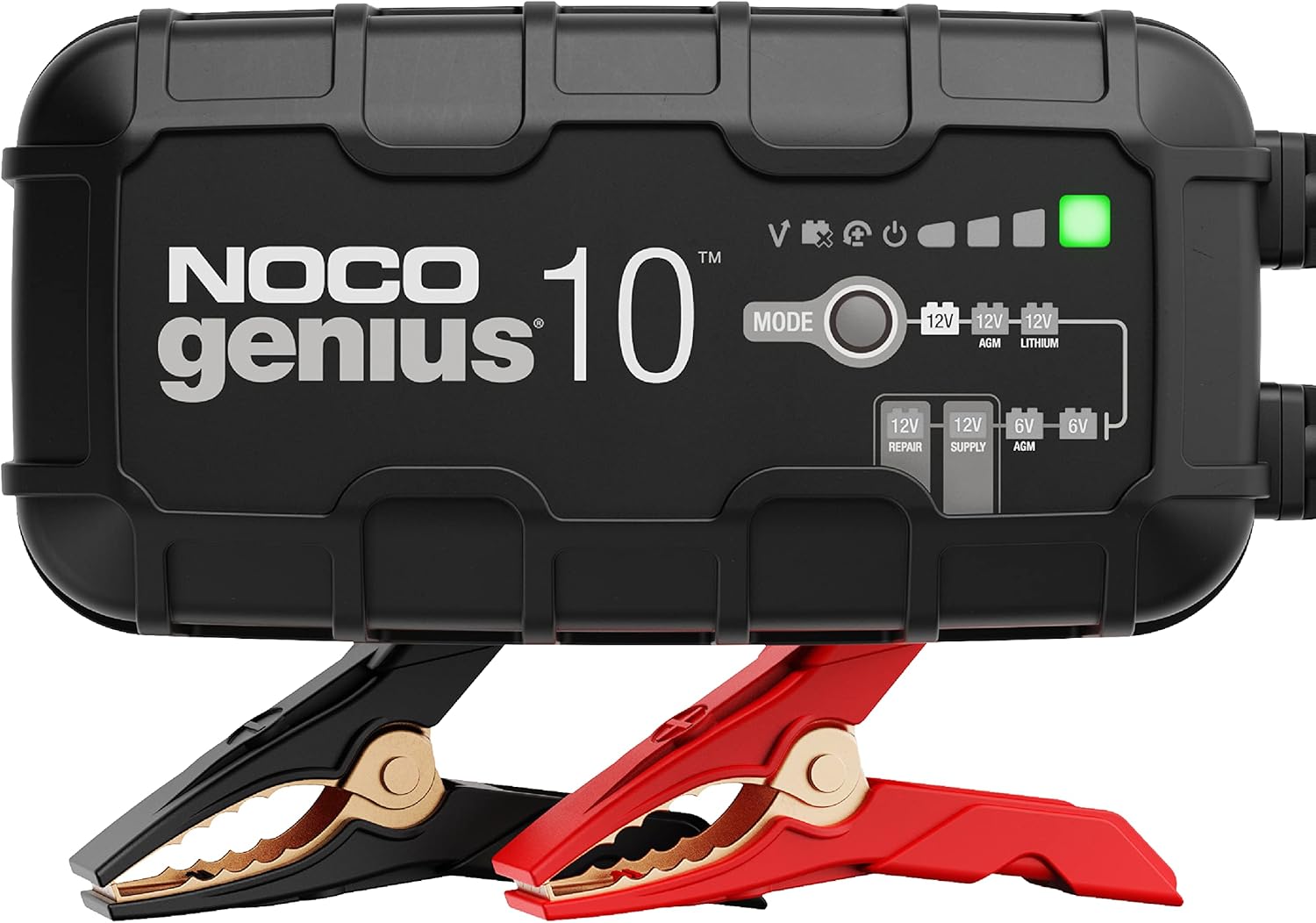
Looking for a smart charger that can revive, maintain, and protect your batteries with minimal fuss?
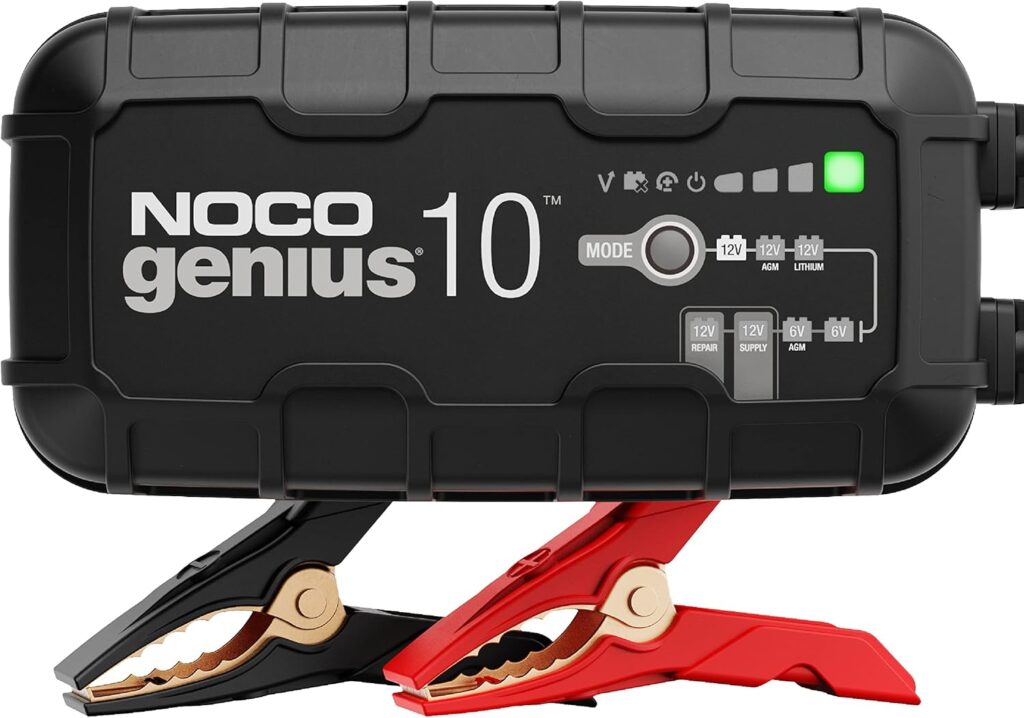

NOCO GENIUS10 — Quick Summary
You’re looking at a compact, powerful charger designed to be an all-in-one solution for 6V and 12V batteries. The NOCO GENIUS10: 10A 6V/12V Smart Battery Charger – Automatic Maintainer, Trickle Charger & Desulfator with Overcharge Protection & Temperature Compensation – for Lead-Acid & Lithium Batteries is aimed at anyone who wants reliable charging, long-term maintenance, and recovery of weak or sulfated batteries.
What’s in the box
You’ll find everything you need to get started right away, including the 10A charger itself and both AC and DC cables. The package also includes battery clamps and integrated eyelet terminals, a mounting bracket with screws, and a three-year warranty to protect your purchase.

NOCO GENIUS10: 10A 6V/12V Smart Battery Charger – Automatic Maintainer, Trickle Charger & Desulfator with Overcharge Protection & Temperature Compensation – for Lead-Acid & Lithium Batteries
$99.95 In Stock
Key Features
You’ll appreciate the blend of smart electronics and practical features that make the GENIUS10 easy to use for multiple battery types. Features include multi-chemistry charging (lead-acid and LiFePO4), temperature compensation, desulfation/pulse recovery, automatic maintenance, and a Force Mode for charging dead batteries.
Multi-chemistry compatibility
You can use the GENIUS10 with 6V and 12V lead-acid batteries (AGM, Gel, SLA, VRLA, flooded) as well as lithium iron phosphate (LiFePO4) batteries. That flexibility means you can switch between motorcycles, cars, lawn mowers, boats, and more without needing separate chargers.
Automatic maintenance and trickle charging
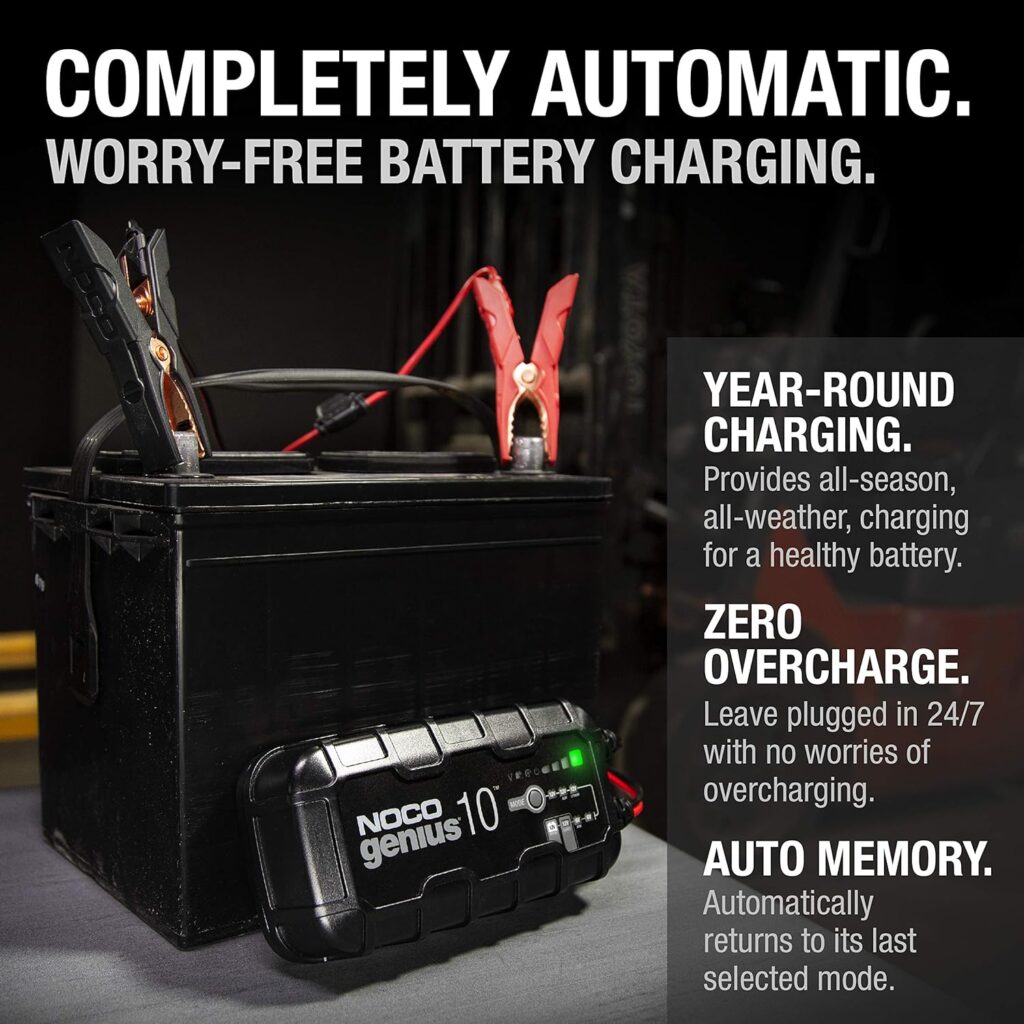
You can leave the charger connected indefinitely thanks to its smart maintenance mode, which prevents overcharging by switching to a float/maintain stage once full charge is reached. This gives you peace of mind for seasonal storage and long-term vehicle ownership.
Desulfation and battery recovery
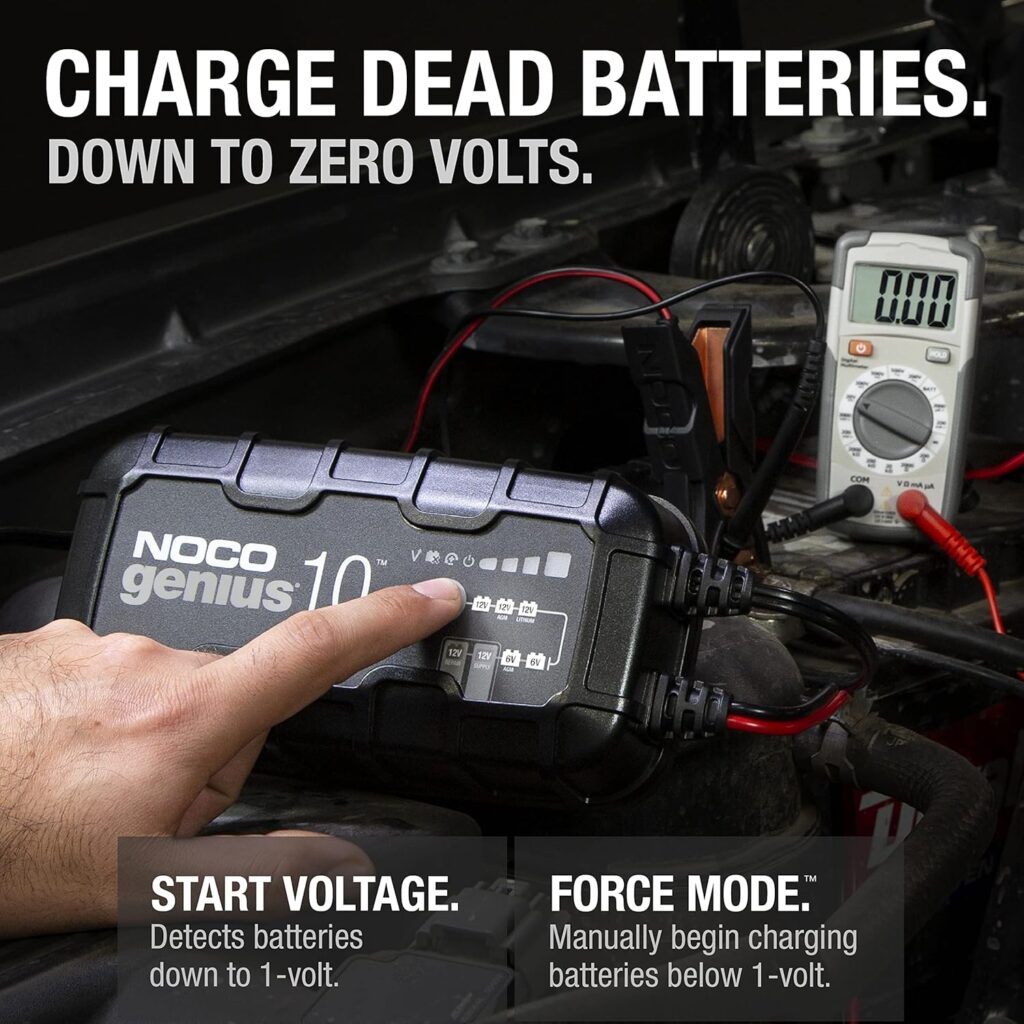
You’ll get precision pulse charging that targets sulfation and acid stratification in lead-acid batteries, helping to restore capacity and performance. Combined with the ability to charge batteries down to 1V (or use Force Mode to attempt recovery from 0V), the GENIUS10 is capable of rescuing many neglected batteries.
Thermal compensation and safety
The integrated thermal sensor adjusts charge voltage according to ambient temperature, so your battery won’t be overcharged in heat or undercharged in cold. Safety protections include overcharge protection, reverse polarity detection, and spark-proof operation.

Technical Specifications
You’ll want the hard specs for planning which battery types and sizes you can charge. The table below breaks down the most relevant technical details so you can quickly compare the GENIUS10 to your needs.
| Specification | Detail |
|---|---|
| Model | NOCO GENIUS10 |
| Output Current | 10 Amps (maximum) |
| Voltage | 6V / 12V selectable |
| Battery Types Supported | Lead-acid: Flooded, AGM, Gel, SLA, VRLA; Lithium: LiFePO4 |
| Minimum Recovery Voltage | Charges from as low as 1.0 V; Force Mode to 0 V |
| Charging Modes | Charge, Maintain, Trickle, Desulfation (Pulse), Force Mode |
| Temperature Compensation | Integrated thermal sensor for dynamic adjustment |
| Safety Features | Reverse polarity protection, spark-proof, overcharge protection |
| Cables Included | 72-inch AC cable; 80-inch DC cable with clamps and eyelet terminals |
| Physical Size | ~17% smaller than older G7200 (as described by manufacturer) |
| Warranty | 3-year limited |
| Designed | Proudly designed in the USA |
| Typical Use Cases | Cars, motorcycles, ATVs, boats, lawn equipment, RVs, classic cars |
Output, voltage, and current explained
You’ll get up to 10 amps of charging current, making the GENIUS10 suitable for most car, truck, and powersport battery charges. The selectable 6V or 12V options let you accommodate both smaller vehicle packs and standard automotive batteries.
Compatibility and Use Cases
You’ll find the GENIUS10 supports a wide variety of vehicles and equipment, which reduces the need to buy multiple chargers for different toys and tools. It’s intended for cars, motorcycles, mopeds, lawn mowers, ATVs, UTVs, trucks, SUVs, RVs, campers, trailers, boats, PWCs, and classic cars.
Typical battery sizes and applications
You can comfortably charge and maintain typical automotive batteries (35–100 Ah range) at the 10A rate, plus smaller batteries for motorcycles and lawn equipment at the 6V setting. For larger deep-cycle batteries in RVs or marine applications, you may want a higher-current charger for faster recovery, but the GENIUS10 will handle maintenance and occasional charging.
When to use 6V vs 12V
You should select 6V for older garden tractors, classic vehicles, or certain powersport batteries that use 6V systems. Choose 12V for most modern cars, trucks, and marine batteries. The charger makes this selection straightforward, and you’ll see indicators that confirm the chosen mode.
Performance and Charging Modes
You’ll notice the GENIUS10 uses adaptive charging algorithms to manage charge stages and optimize battery health. Charging includes bulk, absorption, and float stages plus specific modes for desulfation and lithium charging.
Bulk, absorption, and float explained
You’ll see the charger apply a bulk charge to raise battery voltage and then taper into an absorption stage where voltage is controlled and current decreases. When the battery is fully charged, the charger switches to float to maintain a safe, full charge without overcharging.
Force Mode and low-voltage recovery
You can use Force Mode to charge batteries that read 0V or appear completely dead, but you should use it cautiously and follow safety guidance. The GENIUS10 will otherwise begin normal charging from as low as 1V, allowing you to recover deeply discharged batteries that many other chargers won’t attempt.
Charging Modes Table
This table helps you understand which modes to use for different situations so you can choose the right setting quickly.
| Mode | Best For | What it Does |
|---|---|---|
| Standard Charge | Routine charging of 6V/12V batteries | Performs bulk, absorption, and float to fully charge safely |
| Maintain / Float | Long-term battery storage | Keeps battery at optimal charge without overcharging |
| Trickle | Very slow charging or top-off | Low current to maintain smaller batteries |
| Desulfation (Pulse) | Sulfated lead-acid batteries | Uses pulse charging to reduce sulfation and restore capacity |
| Force Mode | Batteries at 0V or severely discharged | Manually override to attempt charging of dead batteries (use with caution) |
How to pick a mode
You’ll typically use Standard Charge for normal cycles and Maintain for storage. Choose Desulfation if you detect reduced capacity due to sulfation, and reserve Force Mode for special recovery scenarios where a battery reads extremely low.

Thermal Compensation and Safety Features
You’ll depend on the thermal sensor to adjust charge voltage relative to ambient temperature, ensuring better battery health across varying climates. Safety hardware and software protect both you and the battery during use.
Why temperature compensation matters
You’ll avoid overcharging in warm conditions and undercharging in cold conditions, which directly influences battery life and performance. The GENIUS10’s thermal compensation means the charger is more accurate across seasons and geographic locations.
Built-in safety protections
You’ll benefit from reverse polarity detection that prevents damage if clamps are connected improperly, as well as spark-proof connections and overcharge protection. These protections reduce the risk of accidents while you’re working with battery terminals.
Desulfation and Battery Recovery
You’ll find desulfation useful if your battery has been left discharged for long periods, which often causes lead sulfate crystals to form and reduce capacity. The GENIUS10’s pulse charging aims to reverse sulfation and recover lost performance when possible.
How the pulse desulfation works
You’ll notice the charger sends controlled pulse currents to the battery, which can break down sulfate crystals and recondition the plates. While results depend on the battery’s age and condition, many users see measurable improvements after treatment.
Realistic expectations for recovery
You’ll sometimes fully restore batteries, but in other cases desulfation may only partially improve capacity if the battery is physically damaged or very old. Use recovery features as a chance to extend life, but be prepared to replace batteries that no longer hold acceptable charge.
Installation and Setup
You’ll be able to set up the GENIUS10 quickly and safely with basic steps and the included accessories. Follow manufacturer guidelines and common battery-safety practices for the best results.
Step-by-step setup
You’ll begin by connecting the clamps or eyelets to the battery terminals — red to positive, black to negative — then plug the charger into AC power. After the charger powers up, select the correct voltage and chemistry settings if required, then allow the charger to complete its programmed cycle.
Mounting and placement tips
You’ll want to place the charger in a dry, ventilated area away from direct sunlight or heat sources, mounting it via the included bracket if you plan a fixed installation. Keep cables neat and avoid tripping hazards so you can periodically check status LEDs without tugging on connections.
Real-World Testing and Performance
You’ll want to know how the GENIUS10 behaves under regular and challenging conditions. In practice, the charger offers predictable performance, steady current delivery, and reliable maintenance that make it useful across many scenarios.
Charging speed and efficiency
You’ll see charging times appropriate to a 10A device — faster than small trickle chargers, but slower than high-amperage commercial chargers. For most automotive batteries, you can expect a full charge from a moderately discharged state in several hours, while deep recoveries will take longer and depend on battery condition.
Day-to-day use and reliability
You’ll appreciate the hands-off nature: set it, let it work, and leave it connected for months if needed. The combination of automatic monitoring and temperature compensation keeps the unit performing reliably during seasonal storage and routine maintenance.
Pros and Cons
You’ll find a mix of strong advantages and a few limitations to consider before you buy.
Pros
You’ll get a compact, powerful, and flexible charger that supports multiple chemistries and offers desulfation and low-voltage recovery. The inclusion of thermal compensation, safety protections, and a three-year warranty adds real value.
Cons
You’ll be limited by a 10A maximum output if you need very fast charging for large deep-cycle batteries or multi-battery banks. Additionally, Force Mode carries some risk and requires cautious use, as attempting to charge severely damaged batteries can be unpredictable.
Troubleshooting and Common Issues
You’ll encounter a few scenarios where simple checks will resolve most problems, and knowing the common troubleshooting steps will save you time.
Common errors and fixes
You’ll see reverse polarity warnings if clamps are reversed — correct the connection and the charger will reset. If the charger won’t start, verify AC power and check the fuse or outlet; faulty or heavily sulfated batteries may refuse a charge until partially recovered or replaced.
When the charger reports “no battery detected”
You’ll want to ensure connections are secure and the battery is not severely damaged. If the battery voltage is extremely low, try Force Mode carefully; if no response occurs, the battery may be physically compromised and should be inspected or replaced.
Maintenance and Long-Term Care
You’ll want to maintain both your batteries and the charger to ensure consistent performance and longevity. Simple upkeep extends the life of both.
Caring for the charger
You’ll keep the unit clean and dry, store it in a cool place between uses, and periodically inspect cables for wear. Avoid exposing the charger to weather and moisture unless you’re using it in a sheltered area.
Battery maintenance best practices
You’ll charge batteries regularly, avoid leaving them discharged for long periods, and use the maintain/float mode during storage. If you notice reduced capacity or slow starting, consider applying a desulfation cycle before deciding to replace the battery.
Comparison with Competitors
You’ll want to know how the GENIUS10 stacks up versus other chargers in its class. It’s often compared to the NOCO G7200, as well as other multi-mode smart chargers from brands like CTEK and Schumacher.
How it compares to NOCO G7200
You’ll notice the manufacturer states the GENIUS10 is about 17% smaller and delivers over 115% more power than the G7200, positioning it as a more compact and powerful version of that model. If you liked the G7200, the GENIUS10 improves on space and output while preserving NOCO’s smart charging features.
Compared to other brands
You’ll find many smart chargers with similar feature sets, but the GENIUS10 stands out for its combination of multi-chemistry support, low-voltage recovery, and compact design. Some competitors may offer higher amperage for rapid charging or different user interfaces, so match features to your priorities.
Who Should Buy It
You’ll benefit most from the GENIUS10 if you own multiple types of vehicles or equipment and want a single, reliable unit for both charging and long-term maintenance. It’s ideal for car enthusiasts, seasonal vehicle owners, marine and powersport hobbyists, and anyone who wants to recover or maintain batteries without needing professional tools.
Scenarios where it shines
You’ll especially appreciate this charger if you store a classic car, maintain a fleet of lawn equipment, or want to keep a boat battery healthy through winter. The desulfation and maintain modes make it practical where batteries sit unused for extended periods.
Buying Tips and What to Consider
You’ll want to consider your battery sizes, how quickly you need to charge, and whether portability or higher current is more important. The GENIUS10 is versatile, but it’s not targeted at industrial multi-bank charging or rapid charging commercial needs.
Consider battery capacity and charging time
You’ll get appropriate performance for typical automotive batteries up to 100 Ah if you’re willing to accept multi-hour charging times. If you need very fast charging for large deep-cycle banks, evaluate higher-amperage models.
Accessories and installation options
You’ll find the included eyelet terminals useful for permanent installation in a garage or workshop. If you plan to use it on multiple vehicles, the clamp set is handy; for permanent setups, consider mounting and hard-wiring options that fit your workflow.
Warranty, Support and Design
You’ll have reassurance from a three-year warranty and NOCO’s support network if anything goes wrong, plus the charger’s compact design is convenient for storage and use. The company’s emphasis on safety and user-friendly design adds confidence to your purchase.
Warranty claims and customer service
You’ll contact NOCO support for warranty issues if defects emerge during the coverage period. Keep your receipt and product information handy; the three-year warranty should cover manufacturing defects but not misused or physically damaged units.
Build quality and usability
You’ll appreciate the small footprint and robust connectors, which make the charger easy to handle and store. The indicator lights and mode selection are designed to be intuitive, so you’ll spend less time guessing and more time charging.
Final Verdict
You’ll find the NOCO GENIUS10 delivers a great balance of power, intelligence, and safety for a wide range of battery maintenance tasks. If you want a dependable, compact charger with recovery features, temperature compensation, and the ability to serve many vehicle types, this unit is a strong choice.
Who should avoid it
You’ll want a higher-amperage charger if you consistently need rapid recharge for very large deep-cycle batteries or multi-battery bank systems. If your needs are industrial or commercial with frequent heavy-duty charging, look at multi-bank or higher-current solutions instead of a 10A charger.
FAQ (Frequently Asked Questions)
You’ll find answers to common questions here so you can make an informed purchase and use the charger confidently.
Can the GENIUS10 charge lithium batteries safely?
Yes, you can charge LiFePO4 batteries using the appropriate mode on the GENIUS10, and the charger’s algorithms will manage charging safely when you select the correct chemistry.
Can you leave it connected to a battery indefinitely?
Yes, the charge maintainer/float mode is designed to keep a battery topped off without overcharging, making it safe to leave connected for long-term storage.
Is Force Mode dangerous?
Force Mode is powerful and should be used cautiously; you’ll use it only when a battery reads 0V or is severely discharged, and you should monitor the process closely. If a battery shows signs of damage, replace it rather than attempting aggressive recovery.
How long does desulfation take?
Desulfation time varies by the severity of sulfation and battery condition; you’ll often run the cycle for several hours or until meaningful improvement is detected, but results aren’t guaranteed for very old or physically damaged batteries.
Final Recommendations and Best Practices
You’ll get the best results when you match charger settings to battery type, follow safety protocols, and use maintain mode for storage. Charge regularly, inspect batteries for damage, and don’t hesitate to replace batteries that show physical failure or inability to hold charge despite recovery attempts.
Quick checklist before charging
You’ll ensure the charger is in good condition, cable connections are clean and secure, ventilation is adequate, and the correct chemistry/voltage is selected before starting. Keep a fire extinguisher nearby and use personal protective equipment if you’re new to battery work.
You now have a thorough review of the NOCO GENIUS10, its strengths, limitations, and where it fits in your toolkit. Use this information to decide if it meets your charging, maintenance, and battery recovery needs.
Disclosure: As an Amazon Associate, I earn from qualifying purchases.